
Best Wireless and Bluetooth Meat Thermometers
A wireless thermometer stays in the meat for the whole cook and sends the temperature to your phone or a base unit, so you can smoke a brisket without opening the lid every hour. The choices are probe count, connection type and range, whether it reads the smoker's air temperature too, and how long the battery lasts. This guide is for anyone who smokes or roasts low and slow. FSIS describes wireless and smart thermometers as staying in the food and sending live readings to a base unit or device (USDA FSIS), so the app and the base matter as much as the probe.
Jump to section
What we look for
Connection type and range
Bluetooth, Wi-Fi or a repeater base decides whether the reading reaches you indoors.
Number of probes
more probes let you watch two cuts, or a cut and the smoker air, at once.
Ambient (pit) sensor
an ambient sensor reads the smoker's air temperature, which USDA advises checking alongside the food.
App alerts
alerts are the point of going wireless: you hear when the meat reaches its target.
Battery life
an overnight brisket needs a probe that outlasts the cook.
Maximum probe temperature
probes have heat limits; exceeding them can damage the sensor.
- Sources: manufacturer product pages, manuals and app descriptions, plus the USDA FSIS kitchen thermometer guidance and smoking guidance.
How to choose the right wireless meat thermometer
Decide how far you need the signal to reach, then how many probes. For quick checks at the grill, an instant-read thermometer is faster and cheaper.
Connection type and range
Bluetooth-only models connect directly to your phone and range depends on walls and distance. Wi-Fi models or those with a base unit that relays to Wi-Fi reach further. Ranges are maker-stated in open air, so treat them as a ceiling and check whether the app needs an account. Choose the link you will actually keep working: a Bluetooth connection that drops behind a closed door is less useful than a base with a repeater if you watch the cook from the kitchen.
Number of probes
One probe covers a single roast. Two to four let you track a brisket and a pork shoulder, or two chicken breasts of different thickness. Check whether the maker sells extra probes. Label each probe or note its cable, if the maker allows, so you know which cut is which when an alert goes off.
Ambient (pit) sensor
FSIS advises two thermometers when smoking: one for the food and one for the smoker's air temperature (USDA FSIS). Many wireless probes have an ambient sensor in the handle end; check its listed maximum temperature against how hot you cook. Place the ambient sensor where the manual directs, away from the fire and the lid, so it reads the air around the food.
App alerts
Look for target-temperature alerts, range alerts for the smoker air and an estimated time to done. Set targets from our grilling temperature chart.
Battery life
Compare the stated battery life against your longest cook, and check how the probe charges and how long a full charge takes. Work out how long your longest cook runs, add a margin, and compare that against the stated battery life of the probe and of the base separately.
Maximum probe temperature
Compare the listed maximum internal and ambient temperatures. If you sear over direct flame, check the manual for how close to the fire the probe may go. FSIS lists a minimum insertion depth of 1 inch for wireless thermometers (USDA FSIS).
Tips for using your wireless meat thermometer
- Insert the probe at least 1 inch deep, into the thickest part and away from bone (USDA FSIS).
- Check it now and then in ice water if the manual describes a calibration method; FSIS lists wireless models as calibratable (USDA FSIS).
- Keep smoker air between 225 and 300°F for the whole cook (USDA FSIS).
- Thaw meat fully before it goes on, because FSIS warns that thawing in the smoker keeps it in the 40 to 140°F danger zone too long (USDA FSIS).
- Set your alerts from the safe numbers: 145°F plus a 3-minute rest for whole cuts of beef, pork and lamb, 160°F for ground meats and 165°F for poultry (USDA FSIS).
FAQ
Can a wireless thermometer stay in the meat while it cooks?
Yes, that is the point of them. The probe stays inside the food for the whole cook while a base unit or your phone shows the live reading (USDA FSIS).
How deep should the probe go?
FSIS gives at least 1 inch as the minimum depth for wireless thermometers (USDA FSIS).
Can wireless thermometers be calibrated?
Yes, FSIS lists wireless and smart models among those that can be calibrated, and the manual explains the method (USDA FSIS).
Why do I need an ambient probe?
When you smoke, FSIS advises using two thermometers, one in the food and one that reads the smoker's air temperature, and the ambient probe is the second one (USDA FSIS).
Related
-
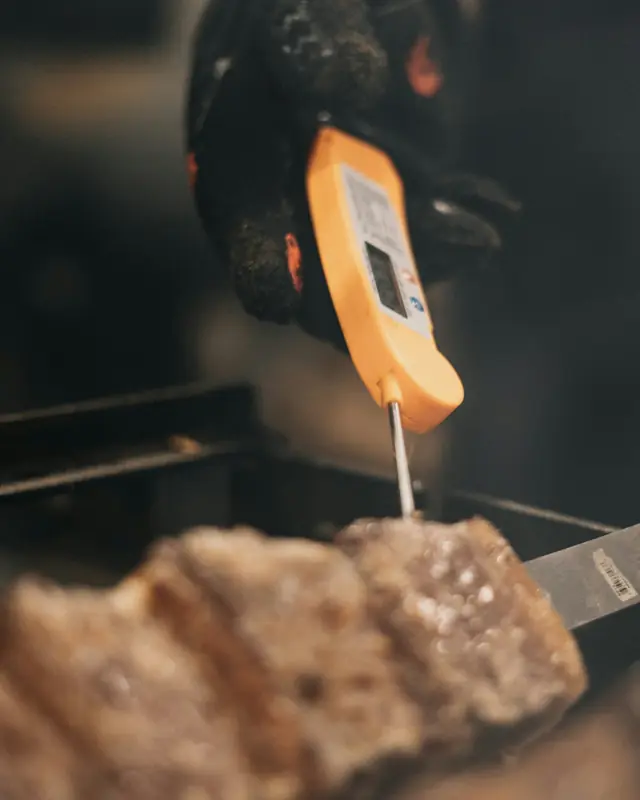
Buying guide
Best Meat Thermometers (Instant-Read)
Read speed, stated accuracy and calibration for instant-read probes.
-
Buying guide
Best Smokers for Every Budget
Offset, vertical, electric and pellet smokers, matched to how much you want to tend the fire.
-
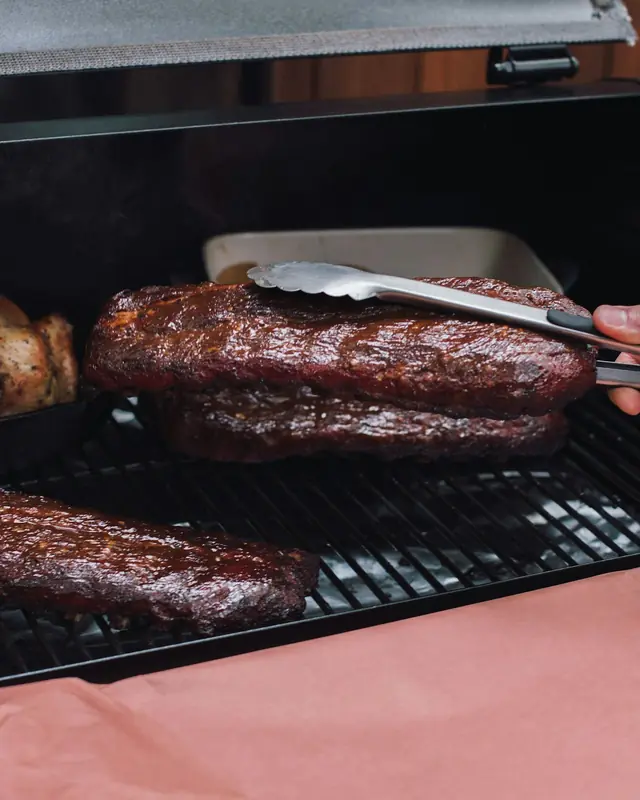
Buying guide
Best Pellet Grills
Controller type, cooking area, hopper size and searing heat, side by side.
-
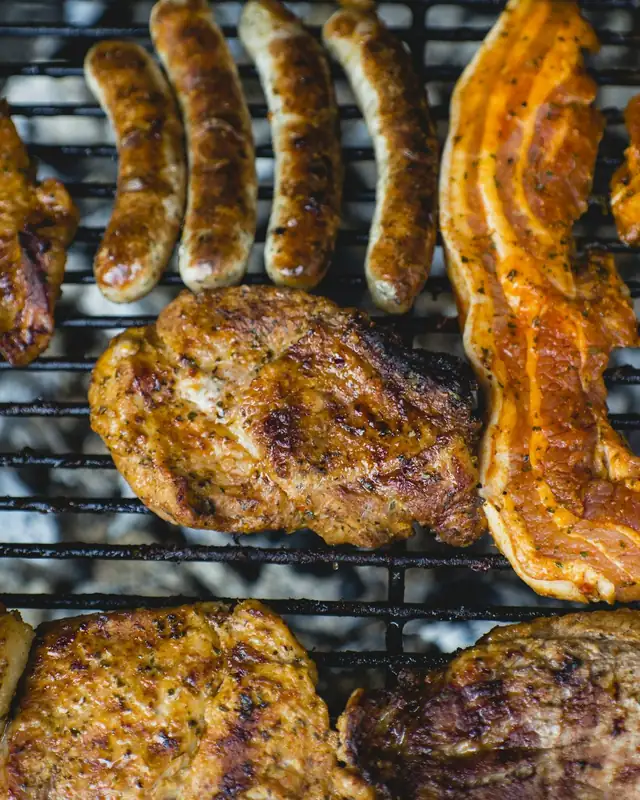
Guide
Grilling Temperature Chart: Safe Internal Temperatures for Every Meat
The USDA numbers for every meat, poultry and seafood, with rest times.
-
Guide
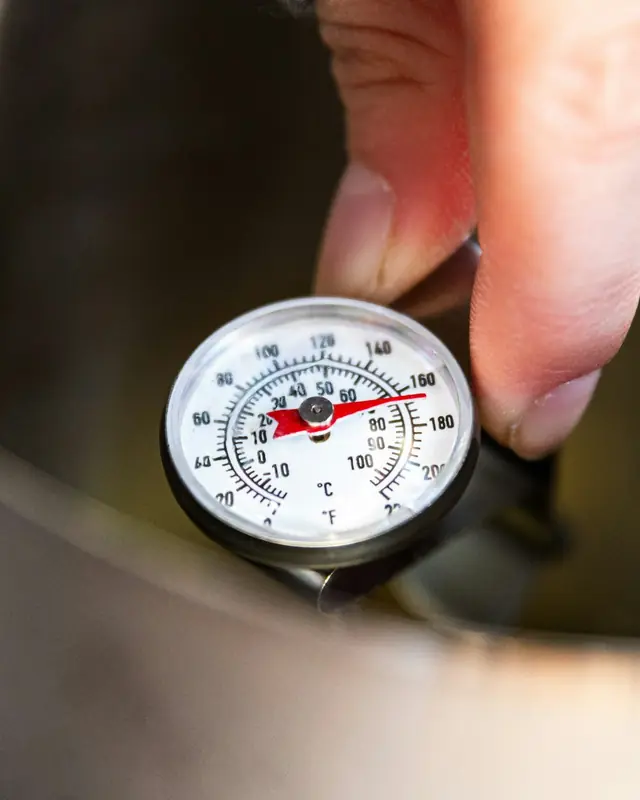
How to Use (and Calibrate) a Meat Thermometer
Probe placement, insertion depth and two easy accuracy checks.
-
Guide
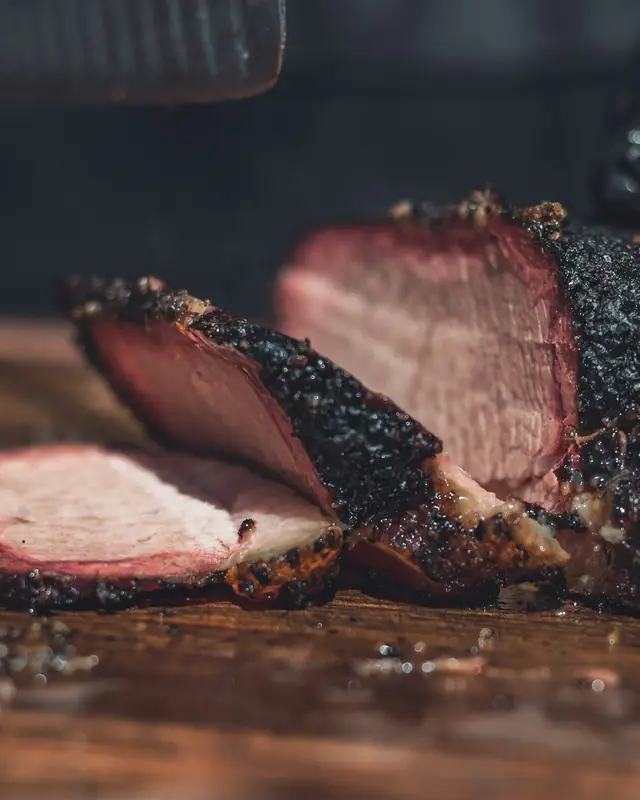
How to Smoke Meat: A Beginner's Guide (USDA-Safe)
The USDA smoker window, done temperatures and the safe way to start.


Get the Grill-Side Card
A printable card with the USDA safe temperatures and an 8-point pre-cook safety check. It costs nothing and is sized to stick on the fridge.