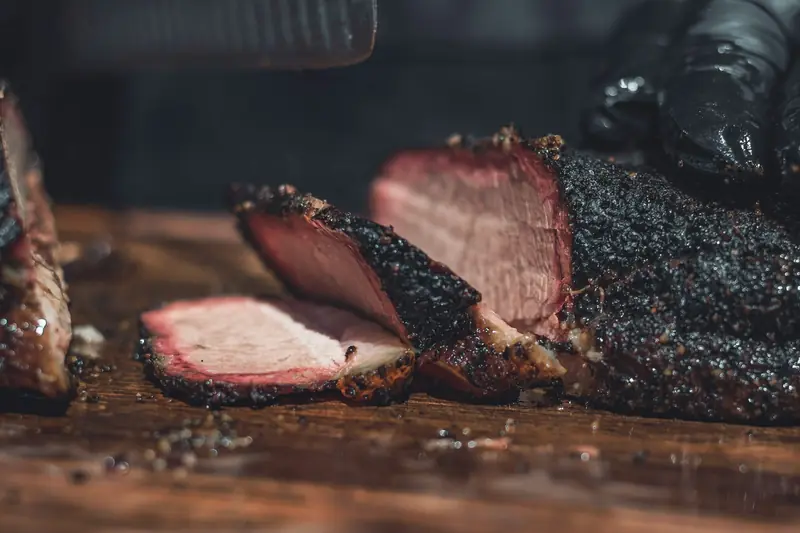
How to Smoke Meat: A Beginner's Guide (USDA-Safe)
The USDA smoker window, done temperatures and the safe way to start.
Quick answer
Hold the smoker's air temperature between 225 and 300°F for the whole cook, which usually takes about 4 to 8 hours. Use two thermometers, one in the food and one for the smoker, and cook to the safe internal temperature: 145°F plus a 3-minute rest for whole cuts, 160°F for ground meat and 165°F for poultry (USDA FSIS).
Jump to section
Smoker temperature: the 225-300°F window
Smoking is cooking at low heat for a long time. USDA FSIS says to keep the smoker's air temperature between 225 and 300°F for the whole cook, and that smoking usually takes about 4 to 8 hours (USDA FSIS).
Low heat is also forgiving of small mistakes, and that is part of why smoking suits beginners. That window is what makes this a beginner skill: the job is to hold a steady temperature, not to chase a perfect number. A smoker that holds its setting without constant tending makes the first cooks easier. If you are choosing one, our guide to the best smokers compares types and specs, and our pellet grill guide covers models with a controller that holds the set temperature.
Plan your day around the time range, and give yourself room for the long end of it. Meat does not cook on your schedule, so a cook that runs long should not push you to raise the heat above the window or pull the food early. A cook of about 4 to 8 hours means you start early, keep a few extra hours free, and do not promise dinner at a fixed time.
Here is a simple order of work for a first smoke, using the steps in this guide:
- Thaw the meat in the refrigerator.
- Marinate in the refrigerator, if you use a marinade.
- Get the smoker to temperature and confirm the air is inside the 225 to 300°F window.
- Put the meat in, add a probe, and set up the water pan.
- Hold the window. Add fuel on schedule.
- Brush on sauce near the end.
- Pull the meat at its safe temperature, rest it where the chart calls for it and refrigerate leftovers in time.
Two thermometers, not one
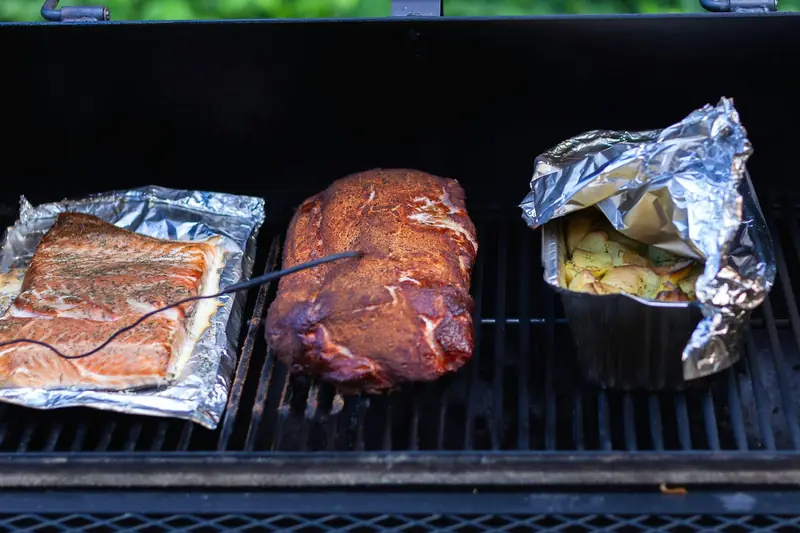
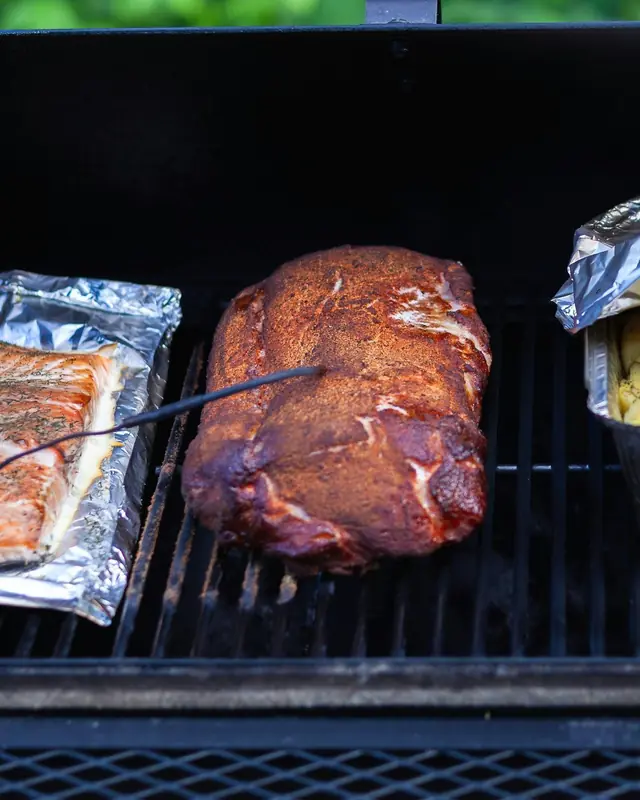
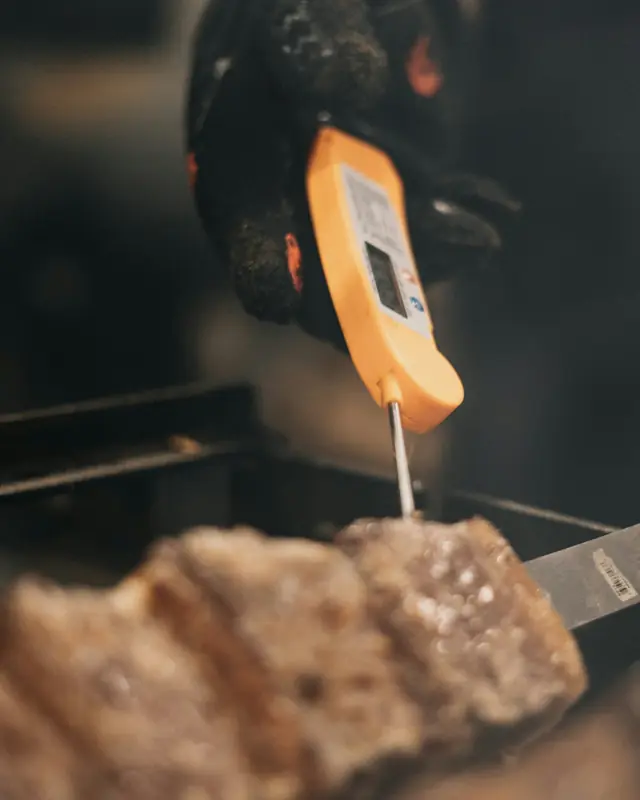
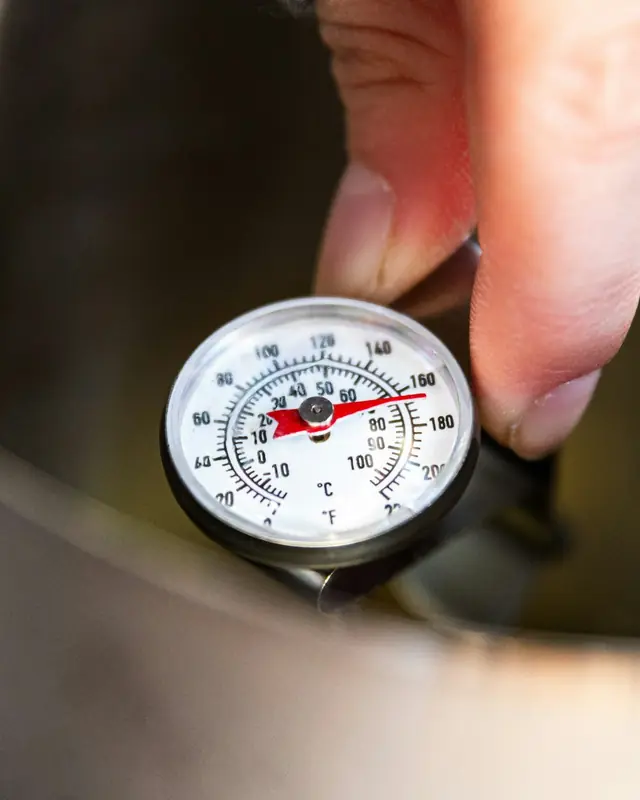
You need to know two temperatures: the air in the smoker and the food inside it. USDA FSIS recommends two thermometers: one in the food (an oven-safe probe can stay in) and one for the smoker's air temperature (USDA FSIS).
A thermometer built into the lid reads the air near the lid, which may differ from the air at the food. A second, separate reading helps you decide whether the cooking space is really inside the window. A leave-in wireless probe is a convenient way to watch the food without lifting the lid. See our guide to the best wireless meat thermometers, and our how-to on using and calibrating a thermometer for placement and depth.
Thaw fully before you smoke
Start with fully thawed meat. USDA FSIS says to thaw completely before smoking, never at room temperature, and that the refrigerator is best. Thawing in the smoker keeps meat in the danger zone between 40 and 140°F (USDA FSIS).
Plan ahead. Do not rush it with warm water or a counter rest, because USDA FSIS rules out room temperature. A large cut needs time in the refrigerator, so move it there before the day you plan to smoke. If you are short on time, choose a cut that is already thawed.
Marinades and sauces done safely
Marinate in the refrigerator. USDA FSIS also says not to reuse raw-meat marinade on cooked food unless you boil it first (USDA FSIS).
For sauce, timing matters. USDA FSIS says to apply sauce in the last 15 to 30 minutes of the cook to prevent burning (USDA FSIS). Many sauces contain sugar, which darkens and burns over a long cook, so a late brush-on gives you the glaze without the char.
Charcoal and wood: how much and which kind
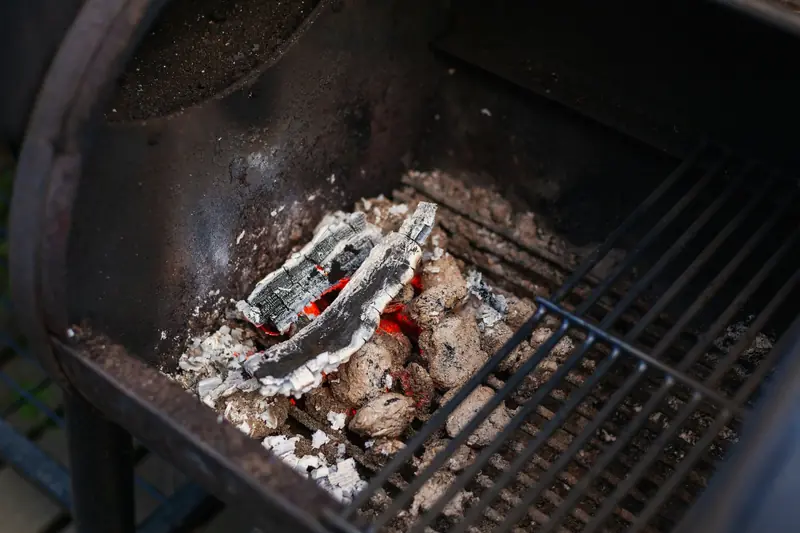
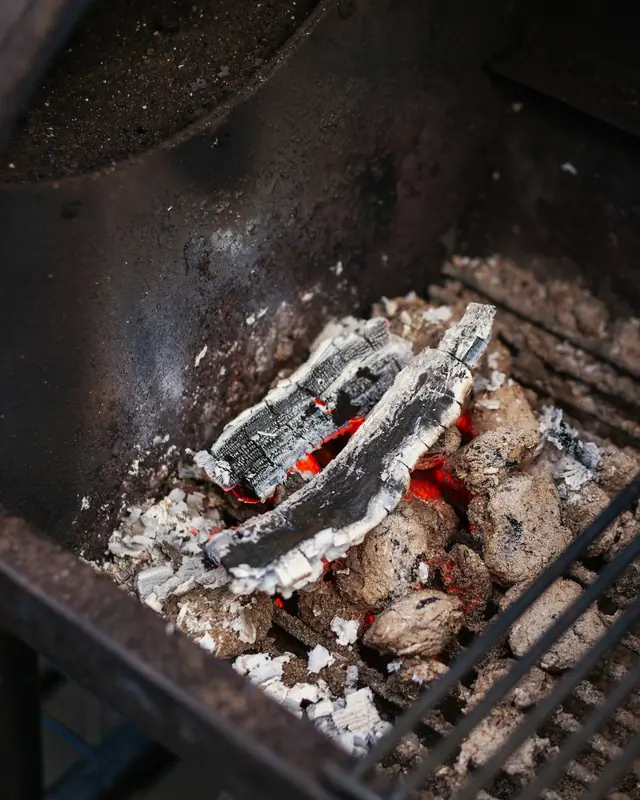
For charcoal, USDA FSIS says to let it get red hot with gray ash, which takes about 10 to 20 minutes. In a smoker, add about 15 briquettes an hour. In a covered grill, start with about 50 briquettes and add about 10 an hour (USDA FSIS).
| Setup | Starting fuel | Add during the cook |
|---|---|---|
| Smoker | Coals red hot with gray ash (about 10 to 20 minutes) | About 15 briquettes an hour |
| Covered grill | About 50 briquettes, red hot with gray ash | About 10 an hour |
For flavor, FSIS says hickory, apple or maple chips or flakes give the most satisfactory smoke flavor. It says to soak the chips and add about 1/2 cup (USDA FSIS). Pellet grills burn compressed wood pellets instead, which is covered in how pellet grills work.
Water pans and flare-ups
Keep a water-filled drip pan in the smoker to catch fat and prevent flare-ups, per USDA FSIS (USDA FSIS). Flare-ups cause temperature spikes and scorched food, so the pan helps with both the safety window and the result.
Your smoker's manual may say where the pan goes and how full it should be. Check the pan from time to time on a long cook, because a pan that runs dry no longer does its job. Do not open the lid more often than you need to, since each peek lets heat out and makes the smoker work harder.
Fat also builds up in a smoker over many cooks. For a routine to keep it under control, see our guide on how to clean a grill.
Done temperatures and storing leftovers
Smoked meat has the same safe minimums as any other cooked meat, and a dark outer crust is not a sign that it is done. Only the thermometer tells you. USDA FSIS lists these done temperatures (USDA FSIS):
- Whole cuts of beef, pork, lamb and veal: 145°F, then a 3-minute rest.
- Ground meats: 160°F.
- All poultry: 165°F.
Pull the meat when the probe in the thickest part reaches the number, then rest it where the chart calls for a rest. If a thick cut is still below its number at the end of your planned time, give it more time in the smoker instead of guessing. Check these in the thickest part with a food thermometer. The full list, including fish and leftovers, is in our grilling temperature chart.
What not to smoke in (makeshift containers)
Use a smoker made for the job. It is tempting to improvise with a barrel, a can or a metal box, but you cannot tell from the outside what coatings or metals are on it, and the heat and smoke touch your food for hours. USDA FSIS says to use smokers made of materials approved for food contact, not makeshift containers such as galvanized steel cans (USDA FSIS).
When you shop, check the maker's description of the materials. Our smoker comparison shows the material each listing names, so you can see what the cooking chamber is made of before you buy.
Gear that helps
-
Best Smokers for Every Budget
Compare pellet, offset, vertical and electric smokers by size and temperature control.
-
Best Wireless and Bluetooth Meat Thermometers
A leave-in probe tracks the food for hours without opening the lid.
-
Best Pellet Grills
A pellet grill's controller holds the set temperature for you.
FAQ
What temperature should a smoker be?
FSIS wants the air inside the smoker held at 225 to 300°F from start to finish (USDA FSIS).
Can I thaw meat in the smoker?
No. Defrost meat all the way before it goes in, ideally in the refrigerator and never on the counter. A smoker is a poor place to thaw, since the meat lingers in the 40 to 140°F danger zone (USDA FSIS).
How long can I keep smoked meat?
Get it into the refrigerator within 2 hours of leaving the smoker. After that, eat it within 4 days or freeze it (USDA FSIS).
Related
-
Buying guide
Best Smokers for Every Budget
Offset, vertical, electric and pellet smokers, matched to how much you want to tend the fire.
-
Buying guide
Best Pellet Grills
Controller type, cooking area, hopper size and searing heat, side by side.
-
Buying guide
Best Wireless and Bluetooth Meat Thermometers
Leave-in probes compared on range, probe count, ambient sensors and battery.
-
Buying guide
Best Meat Thermometers (Instant-Read)
Read speed, stated accuracy and calibration for instant-read probes.
-
Guide
How to Use (and Calibrate) a Meat Thermometer
Probe placement, insertion depth and two easy accuracy checks.
-
Guide
Grilling Temperature Chart: Safe Internal Temperatures for Every Meat
The USDA numbers for every meat, poultry and seafood, with rest times.


Get the Grill-Side Card
A printable card with the USDA safe temperatures and an 8-point pre-cook safety check. It costs nothing and is sized to stick on the fridge.