
Grilling Temperature Chart: Safe Internal Temperatures for Every Meat
The USDA numbers for every meat, poultry and seafood, with rest times.
Quick answer
Cook whole cuts of beef, pork, lamb and veal to 145°F and rest them 3 minutes. Cook all ground meat to 160°F and all poultry to 165°F. Fish is done at 145°F or when the flesh is opaque and flakes with a fork. Reheat leftovers to 165°F. These are the USDA safe minimums on FoodSafety.gov; check them with a food thermometer, not by color.
Jump to section
- Why color and grill marks don't tell you it's done
- Safe minimum internal temperatures (chart)
- The 3-minute rest: which meats need it
- Poultry: one number for every cut
- Ground meat vs whole cuts
- Fish and shellfish: temperature and visual signs
- Leftovers and reheating
- Keeping cooked food out of the danger zone
- Gear that helps
- FAQ
- Sources
Why color and grill marks don't tell you it's done
Color and grill marks are not a reliable test of doneness. In a USDA study, 21% of participants judged hamburger doneness by color and grill marks (USDA FSIS), and that is exactly the habit a thermometer replaces.
The stakes are real. USDA FSIS puts foodborne illness at about 48 million illnesses, 128,000 hospitalizations and 3,000 deaths a year in the United States (USDA FSIS). The numbers below are the official safe minimums. Cook to at least these temperatures, measured in the thickest part of the food.
If you don't own a thermometer yet, our guide to the best instant-read meat thermometers compares read speed and accuracy, and a leave-in wireless thermometer is the better tool for long smokes and roasts.
Safe minimum internal temperatures (chart)
Every number in this table comes from the FoodSafety.gov chart, last reviewed November 21, 2024 (FoodSafety.gov).
| Food | Safe minimum | Rest time |
|---|---|---|
| Beef, bison, veal, goat and lamb: steaks, roasts, chops | 145°F (63°C) | 3 minutes |
| Pork: steaks, roasts, chops | 145°F (63°C) | 3 minutes |
| Raw ham (fresh or smoked, uncooked) | 145°F (63°C) | 3 minutes |
| Ground beef, pork, veal, lamb and other ground meat or sausage | 160°F (71°C) | None |
| Rabbit and venison (wild or farm-raised) | 160°F (71°C) | None |
| All poultry: whole birds, breasts, legs, thighs, wings, ground poultry, giblets, sausage | 165°F (74°C) | None |
| Stuffing cooked inside poultry | 165°F (74°C) | None |
| Fish (finfish) | 145°F (63°C), or flesh opaque and flakes with a fork | None |
| Shrimp, lobster, crab, scallops | Flesh pearly or white and opaque | None |
| Clams, oysters, mussels | Shells open during cooking | None |
| Precooked ham, reheated | 165°F (74°C); 140°F (60°C) if packaged in a USDA-inspected plant | None |
| Leftovers and casseroles | 165°F (74°C) | None |
Print-friendly version: the same core numbers are on our free Grill-Side Card, which you can keep by the grill.
The 3-minute rest: which meats need it
The rest is part of the safety standard for whole cuts, not just a juiciness tip. USDA lists a 3-minute rest after reaching 145°F for beef, bison, veal, goat and lamb steaks, roasts and chops, for pork steaks, roasts and chops, and for raw ham (FoodSafety.gov).
Take the meat off the grill when your thermometer reads 145°F in the thickest part, set it on a clean plate or board, and wait 3 minutes before you cut or serve it. Ground meat and poultry have no rest time in the chart: they are safe once they reach 160°F and 165°F.
Poultry: one number for every cut
Poultry is the easiest category to remember, because there is only one number. All poultry is safe at 165°F (74°C): whole chickens and turkeys, breasts, legs, thighs, wings, ground poultry, giblets, poultry sausage and any stuffing cooked inside the bird (FoodSafety.gov).
Where you measure matters more than with any other meat. For a whole bird, USDA FSIS says to check three places: the innermost part of the thigh, the innermost part of the wing and the thickest part of the breast (USDA FSIS). The center of any stuffing must also reach 165°F.
Ground meat vs whole cuts
Why does a burger need 160°F when a steak is safe at 145°F? The chart treats them differently: whole cuts of beef, pork, lamb and veal are safe at 145°F with a rest, while ground beef, pork, veal, lamb and other ground meat or sausage need 160°F with no rest (FoodSafety.gov). Rabbit and venison, wild or farm-raised, are also 160°F.
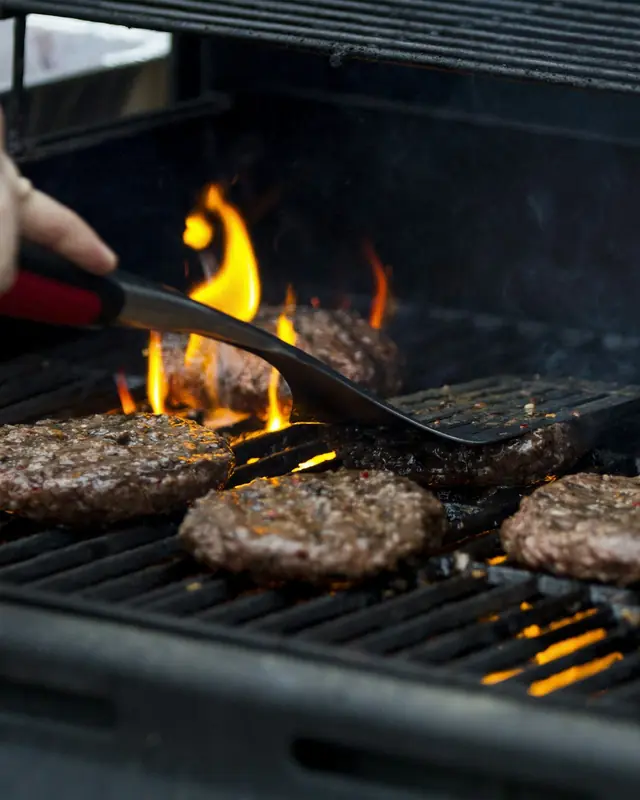
Burgers and sausages are thin, which makes them tricky to probe. USDA FSIS advises inserting the thermometer through the side of thin foods such as patties and chops, so the sensor sits in the center (USDA FSIS). A thermometer with a thin tip and a fast read makes this easy; our meat thermometer guide lists read time and probe length for each pick.
Fish and shellfish: temperature and visual signs
Seafood is the one category where USDA gives visual signs alongside, or instead of, a number (FoodSafety.gov):
- Fish: 145°F, or until the flesh is no longer translucent and separates easily with a fork.
- Shrimp, lobster, crab and scallops: until the flesh is pearly or white and opaque.
- Clams, oysters and mussels: until the shells open during cooking.
On the grill, a fish basket or a sheet of foil keeps delicate fillets from falling apart while you check them. For thick salmon or tuna steaks, use the thermometer and aim for 145°F in the center.
Leftovers and reheating
Cooked food that comes back to the heat has its own targets. Reheat leftovers and casseroles to 165°F (74°C). Precooked ham should be reheated to 165°F, or to 140°F if it was packaged in a USDA-inspected plant (FoodSafety.gov). Raw ham, fresh or smoked, follows the whole-cut rule: 145°F plus a 3-minute rest.
When you reheat on the grill, use indirect heat so the outside doesn't burn before the center is hot, and check the middle with your thermometer.
Keeping cooked food out of the danger zone
Cooking to the right temperature is half the job. The other half is what happens after. USDA calls the range between 40°F and 140°F the danger zone. Perishable food left in that range for more than 2 hours is a risk, and when the air is above 90°F the limit drops to 1 hour (USDA FSIS; USDA).
A simple routine for grill days:
- Cook to the temperatures in the chart and check with a thermometer.
- Do not leave perishable food between 40°F and 140°F for more than 2 hours, or 1 hour when the air is above 90°F.
- Put leftovers away inside that same window.
- Reheat leftovers to 165°F.
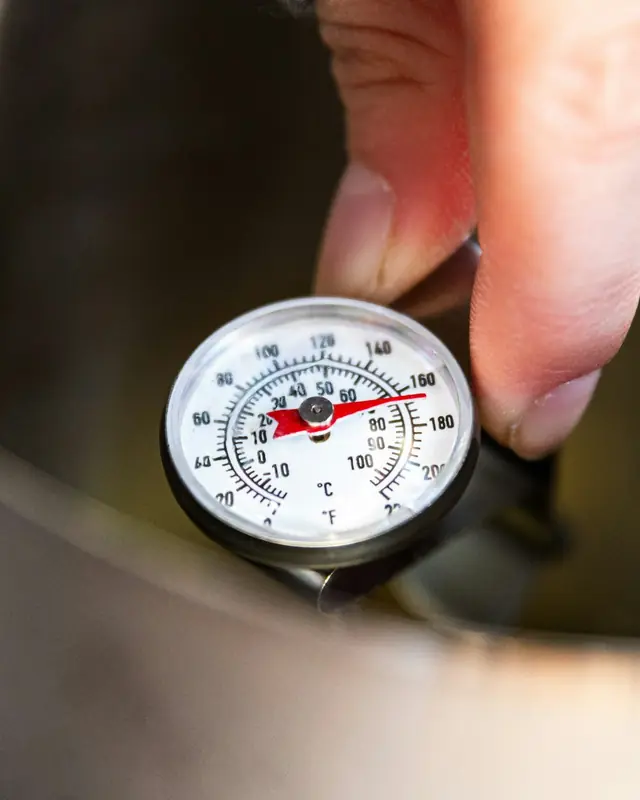
A thermometer you trust makes every step easier. If yours is old, the ice-water check in our calibration guide takes only a few minutes: in stirred ice water, a working thermometer should read 32°F (USDA FSIS).
Gear that helps
-
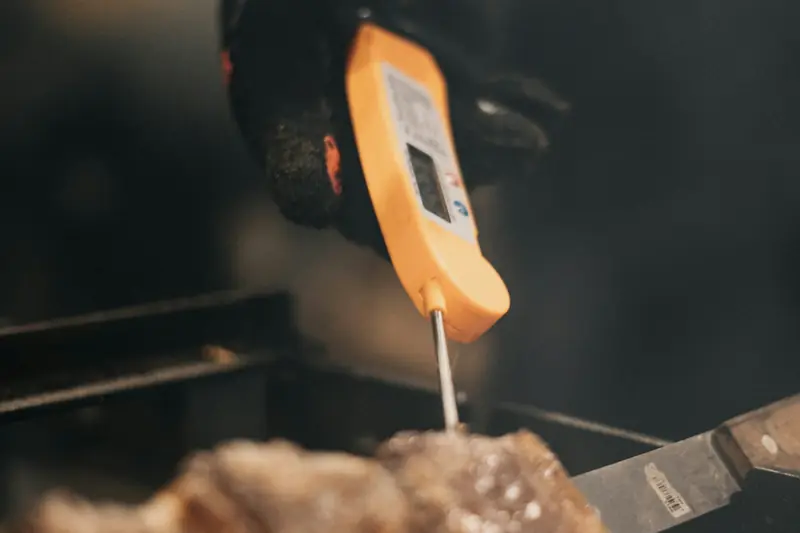
Best Meat Thermometers (Instant-Read)
An instant-read thermometer checks a steak or a burger in seconds at the grill.
-
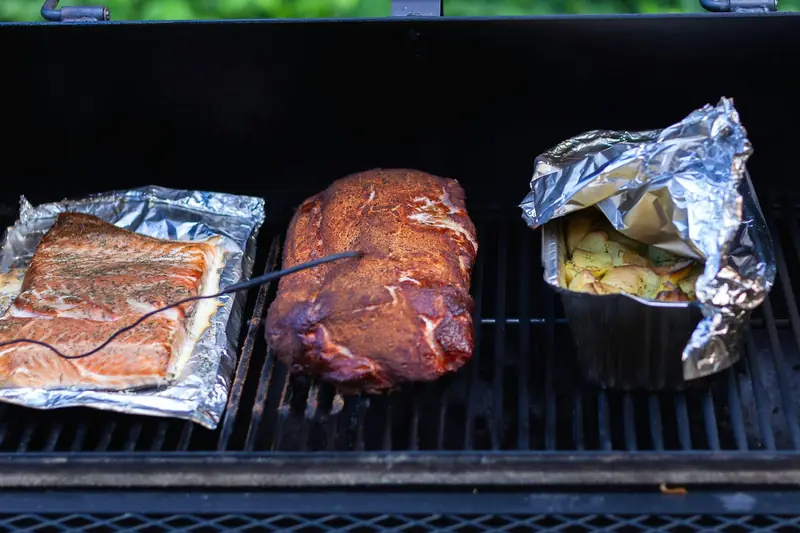
Best Wireless and Bluetooth Meat Thermometers
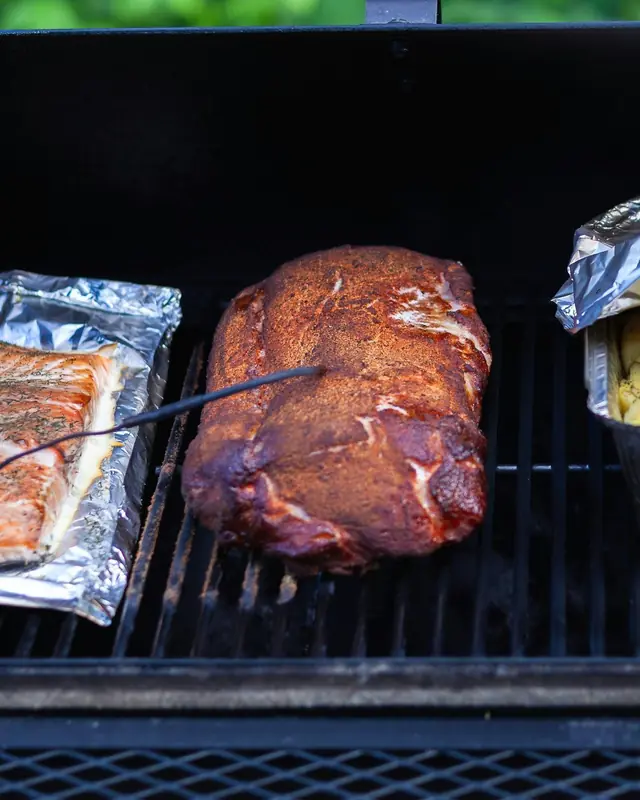
A leave-in wireless probe tracks a roast or a brisket for the whole cook and alerts you at the target.
-
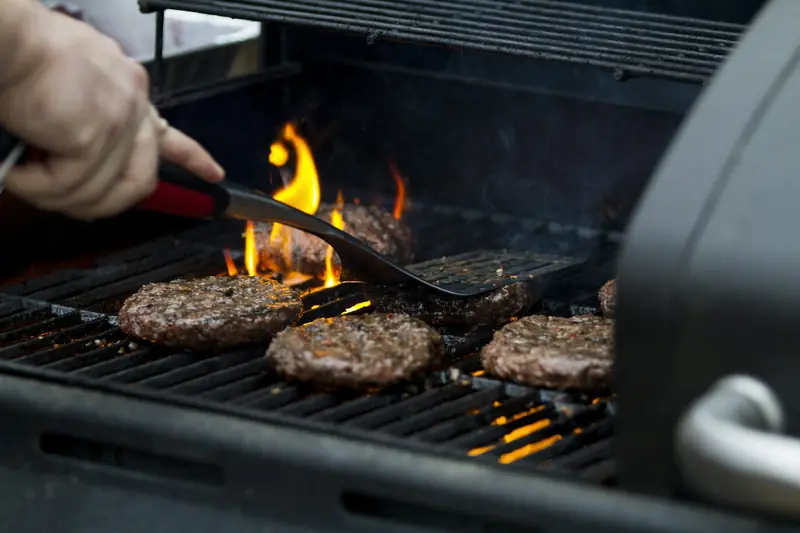
Best Gas Grills
Steady, adjustable heat makes it easier to bring thick cuts up to temperature without burning the outside.
FAQ
What temperature is chicken done?
All poultry, including breasts, thighs, wings, ground chicken and stuffing cooked inside the bird, is safe at 165°F (FoodSafety.gov).
Is pink pork safe to eat?
Color does not tell you. Pork steaks, roasts and chops reach a safe 145°F after a 3-minute rest even if they look slightly pink, while ground pork must hit 160°F (FoodSafety.gov).
What temperature should a burger be?
160°F for burgers made from ground beef, pork or other ground meat (FoodSafety.gov). Insert the thermometer through the side of the patty so the tip reaches the center (USDA FSIS).
Why do some meats need a rest and others don't?
USDA sets the 3-minute rest for whole cuts of beef, pork, lamb, veal and raw ham at 145°F. Ground meat and poultry have no rest in the chart because their temperatures (160°F and 165°F) are already the safe point (FoodSafety.gov).
Related
-
Buying guide
Best Meat Thermometers (Instant-Read)
Read speed, stated accuracy and calibration for instant-read probes.
-
Buying guide
Best Wireless and Bluetooth Meat Thermometers
Leave-in probes compared on range, probe count, ambient sensors and battery.
-
Guide
How to Use (and Calibrate) a Meat Thermometer
Probe placement, insertion depth and two easy accuracy checks.
-
Buying guide
Best Pellet Grills
Controller type, cooking area, hopper size and searing heat, side by side.
-
Buying guide
Best Gas Grills
Burners, cooking area, grates and warranty for propane and natural gas grills.
-
Guide
How to Smoke Meat: A Beginner's Guide (USDA-Safe)
The USDA smoker window, done temperatures and the safe way to start.
Get the Grill-Side Card
A printable card with the USDA safe temperatures and an 8-point pre-cook safety check. It costs nothing and is sized to stick on the fridge.