Grill Safety: Placement, Propane Checks and Charcoal Rules
Placement, the propane leak test, charcoal rules and carbon monoxide.
Quick answer
Set the grill well away from your home, deck railings, eaves and overhanging branches, and never leave it lit and unattended. On a gas grill, brush soapy water on the hose and connections: bubbles mean a leak. Never burn charcoal indoors, because carbon monoxide kills more than 400 Americans a year (CDC). Fire-safety advice comes from NFPA.
Jump to section
How common grill fires are, and when they peak
Grill fires are not rare. NFPA's 2020-2024 data shows an average of 12,141 home fires a year involving grills, hibachis or barbecues: 6,110 structure fires and 6,031 outside or unclassified fires (ANSI/NFPA). Home grilling fires peak in July, followed by June, May and August.
That pattern is not surprising. Summer is when people grill most, and when they are most distracted by guests, kids and drinks. Most of the rules below are cheap habits, not equipment.
A quick pre-cookout checklist covers most of this guide:
- Is the grill well clear of the house, railings, eaves and branches?
- For gas: has the hose and every connection passed a soap-and-water check?
- For charcoal: do you have a chimney or electric starter, and a metal container for the coals?
- Is anyone, including kids and pets, standing inside the 3-foot zone?
- Is someone assigned to stay with the grill the whole time it is lit?
Use this guide as a checklist before the first cookout of the season. If you are still choosing a grill, safety features are one more reason to read specs closely in our guides to the best gas grills and the best charcoal grills.
Where to put your grill
Place the grill well away from your home, deck railings, eaves and overhanging branches, according to NFPA (ANSI/NFPA). The reason is easy to picture: heat and flying sparks rise, and anything above or beside the grill can catch.
Older NFPA data shows where fires start. In NFPA's older 2007-2011 data, 29% of home grill structure fires started on an exterior balcony or open porch, 27% on a courtyard, terrace or patio, and 6% in the kitchen (NFPA via CT.gov). That is an older report, but the lesson holds: tight spaces next to a building are the risky ones.
Read the manufacturer's manual as well, which may allow a closer or require a greater distance for your model. Local rules can be stricter than general advice. Massachusetts, for example, requires grills to be 10 feet from the side of a building unless the manufacturer allows closer (Mass.gov). That is one state's rule, not a national one, so check your local fire code and your lease or HOA rules, especially if you live in an apartment.
The propane leak test (soap and water)
A soap-and-water test is a simple way to find a leak in the hose or at a connection. NFPA and Mass.gov describe the same steps (NFPA via CT.gov; Mass.gov):
- Apply soapy water to the hose and connections.
- Watch for bubbles. Bubbles mean a leak.
- If you find a leak, turn off the tank and the grill.
- If the leak stops, get the grill serviced before you use it again.
- If the leak does not stop, call the fire department.
Read your owner's manual too. It shows how your model's regulator, hose and cylinder connect, and how the maker wants you to shut the grill down. Run this test at the start of the season and any time you reconnect a cylinder. When you need a new gas grill, our gas grill comparison lists hose and burner details so you know what you are checking.
Propane cylinder storage
Where you keep the cylinder matters as much as how you connect it. Mass.gov gives these rules for Massachusetts, which are a good example of what local codes can require (Mass.gov):
- Keep propane cylinders at least 10 feet from building openings.
- Keep them at least 20 feet from air intakes and ignition sources.
- Store them upright, outdoors and in the shade.
- Never store a cylinder in a vehicle.
Look up the rule for your area before you move a cylinder or a grill. These are Massachusetts rules, not national ones. Your state or city may differ, so check your local code. The common thread is to keep cylinders outside, upright, shaded and away from anything that could ignite them or draw gas inside.
Lighting charcoal safely
Charcoal needs more hands-on attention than gas, so the method you use to light it matters. NFPA's tips are to use a chimney starter with newspaper as fuel, or an electric starter (NFPA via CT.gov). Both avoid liquid fuel near an open flame.
If you do use fluid, use only charcoal starter fluid. Never add it, or any flammable liquid, to a lit fire (ANSI/NFPA).
Disposing of hot coals and ash
Coals stay dangerous long after the food is off. NFPA says to let coals cool completely before you put them in a metal container (ANSI/NFPA).
Mass.gov gives a specific method: let coals burn out and cool for 48 hours, or soak warm ashes thoroughly in water before they go into the metal container (Mass.gov). Keep a metal container just for ash, set it on a non-flammable surface, keep it away from the house and anything that burns,. If you are unsure whether anything is still warm, wait longer.
Carbon monoxide: never grill indoors
Burning charcoal produces carbon monoxide, and indoors it has nowhere to go. The CDC reports that unintentional carbon monoxide poisoning not linked to fires kills more than 400 Americans a year and sends more than 100,000 to emergency departments (CDC). CPSC's charcoal safety page carries the same warning (CPSC).
The safe reading of that rule is to treat any enclosed space, such as a garage or a tent, as indoors. Move the grill out into open air, even when the weather is poor. If the weather is bad, wait for a better day or cook on the stove instead. If you want a grill that is easy to move to an open space, see our best portable grills, and read its criteria before you buy.
Kids, pets and the 3-foot zone
NFPA says to keep children and pets at least 3 feet from the grilling area (ANSI/NFPA). A grill is easy to bump when kids chase a ball or a dog runs past. Adults need the rule as much as kids do, because a crowded patio makes it easy to crowd the grill. Make it a visible rule: mark the edge of the zone, tell guests, and give kids a job away from the heat.
The same habit makes sense with any hot cooking surface, including a flat-top. Our guide to flat-top griddles explains sizes and heat zones, which helps you plan where people can stand.
Gear that helps
-
Best Gas Grills
Check the hose, regulator and connection details before you buy a propane model.
-
Best Charcoal Grills (Kettles and Kamados)
Look for a lid, vents and an ash catcher that make coals easier to manage and dispose of.
-
Best Portable Grills for Tailgating and Camping
Small grills are where indoor and tent use tempts people most, so know the rules first.

FAQ
How do I check a propane grill for a leak?
Brush soapy water over the hose and connections. If bubbles appear, there is a leak, and a match or lighter is never the way to look for one (Mass.gov).
Can I use a charcoal grill indoors or in a garage?
No. Charcoal must never be burned indoors. Unintentional carbon monoxide poisoning that is not tied to fires claims more than 400 American lives a year (CDC).
How close can kids and pets be to the grill?
Keep them at least 3 feet back from the grilling area, according to NFPA (ANSI/NFPA).
Related
-
Buying guide
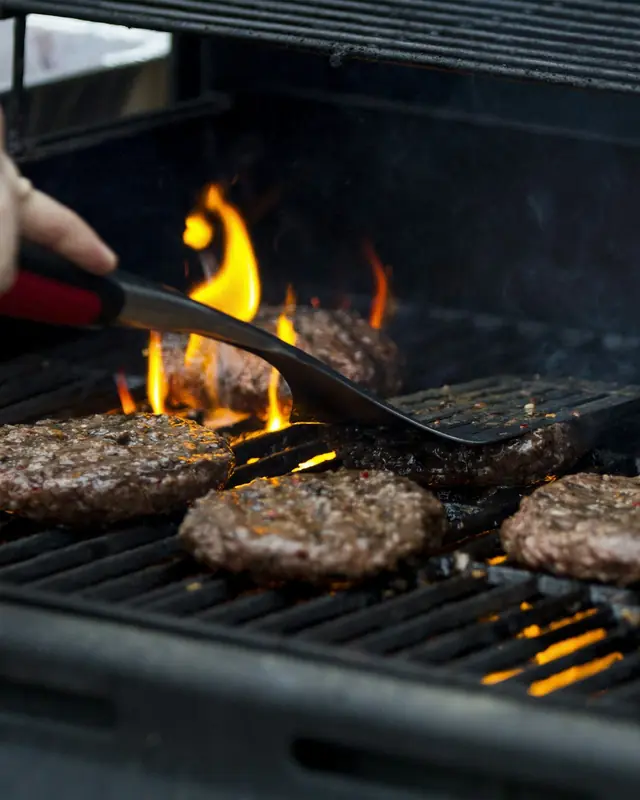
Best Gas Grills
Burners, cooking area, grates and warranty for propane and natural gas grills.
-
Buying guide
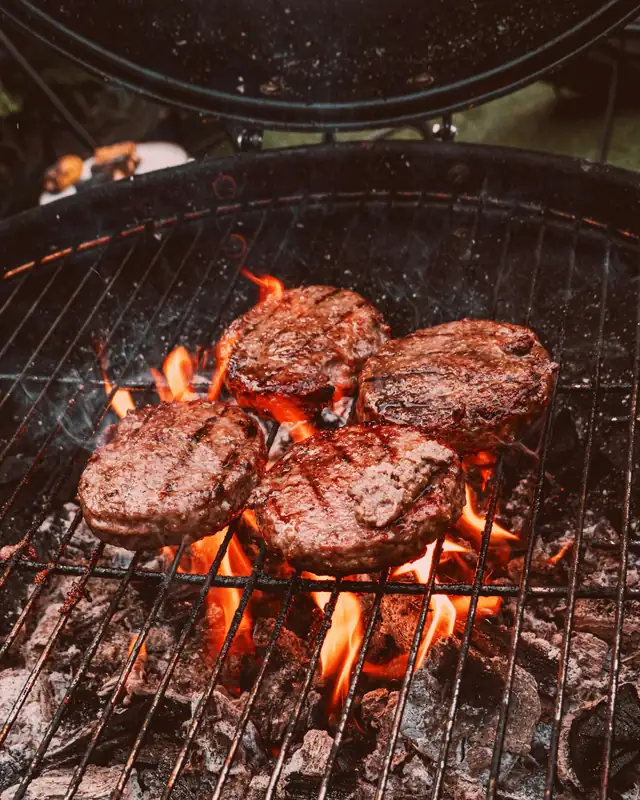
Best Charcoal Grills (Kettles and Kamados)
Kettles and kamados compared on airflow, ash handling, size and weight.
-
Buying guide
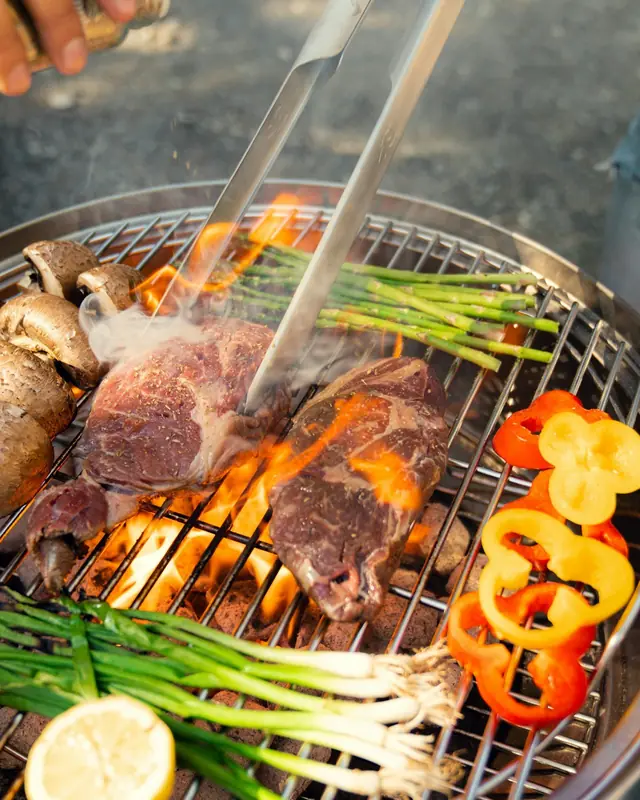
Best Portable Grills for Tailgating and Camping
Weight, fuel type, cooking area and setup for tailgate and camp grills.
-
Buying guide
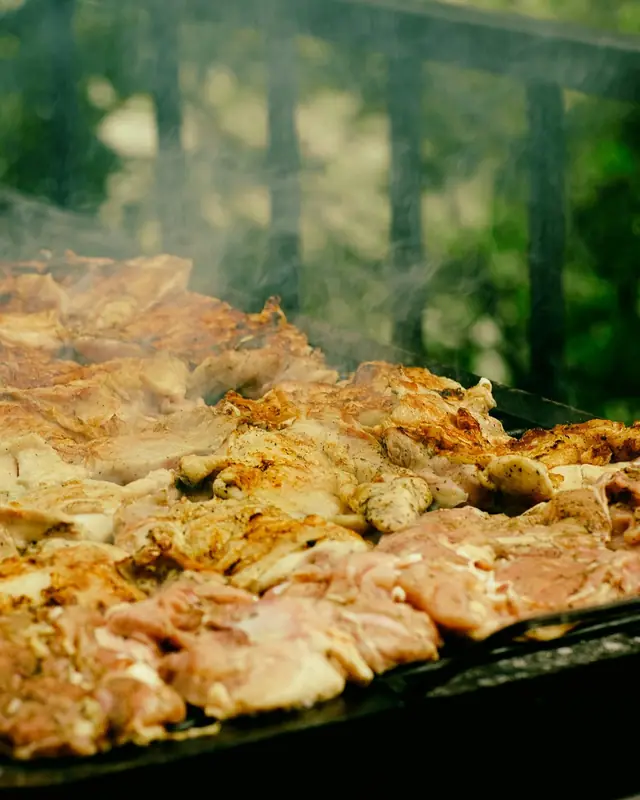
Best Outdoor Griddles and Flat Tops
Cooktop size, burners, grease systems and lids for outdoor flat tops.
-
Guide
How to Clean a Grill Without the Wire-Bristle Risk
A safer way to clean grates, plus grease care and a simple schedule.
-
Comparison
Charcoal vs Gas Grill: Flavor, Cost and Convenience
Live-fire flavor and high heat, or push-button convenience.


Get the Grill-Side Card
A printable card with the USDA safe temperatures and an 8-point pre-cook safety check. It costs nothing and is sized to stick on the fridge.