
Best Gas Grills
A gas grill lights in seconds and gives you heat you can turn up or down with a knob, which is why it is still the default backyard grill. The decisions that matter are size, grate material, build quality and whether you need propane or natural gas. This guide is for anyone buying a first gas grill or replacing a rusted one.
Jump to section
What we look for
Burners and cooking area
burner count and primary area decide how much you can cook at once and whether you can set up two heat zones.
Grate material
grates touch the food: cast iron holds heat, stainless resists rust, porcelain coatings make cleanup easier.
Build quality
the firebox, lid and frame decide how long the grill lasts outdoors.
Ignition
a reliable igniter is the difference between grilling and hunting for a lighter.
Side or sear burner
a side burner heats sauces and sides; a sear burner adds a very hot zone for steaks.
Fuel type
propane (LP) and natural gas (NG) grills are built differently; you need the one that matches your supply.
Warranty
the warranty tells you how long the maker expects each part to last.
- Sources: manufacturer product pages, manuals and warranty documents, plus NFPA and Massachusetts fire-safety guidance on placement and leak checks.
How to choose the right gas grill
Use these seven points in order. If you are still choosing between fuels, read charcoal vs gas grill or pellet grill vs gas grill first.
Burners and cooking area
Two burners suit a small household or a balcony-sized space. Three or four let you run one side hot and one side low for indirect cooking. Compare primary cooking area rather than total, because total area includes the warming rack. BTU figures are maker-stated; a high BTU number on a large, thin firebox is not the same as heat at the grate, so treat it as one data point, not the verdict.
Grate material
Cast iron (bare or enamelled) gives strong sear marks but needs oil and care to avoid rust. Stainless steel rods are low-maintenance. Porcelain-coated steel is easy to clean but can chip. Whatever you pick, our guide to cleaning grates without wire-bristle risk explains the safest routine.
Build quality
Check what the firebox and lid are made of, whether the cart is welded or bolted, and what the warranty covers for each part. Makers often give separate warranty terms for burners, firebox and the rest of the grill, so read the warranty document, not just the headline number.
Ignition
Look for a push-button or rotary igniter on each burner. Also note the safety basics: NFPA advises opening the lid before lighting a gas grill (NFPA via ANSI), so make sure the lid opens fully in the space you have.
Side or sear burner
A side burner is useful if you cook whole meals outside. A sear burner is worth it if you grill steaks often. Both add width, so measure your patio before you buy, and keep NFPA's placement advice in mind: the grill should sit well away from the house, deck railings, eaves and overhanging branches.
Fuel type
Most grills ship for propane cylinders. If your home has a natural gas line on the patio, look for an NG model or a maker-approved conversion kit, and never convert a grill in a way the manual does not allow. Either way, run the soap-and-water leak test on the hose and connections before the first cook of the year.
Warranty
Compare warranty length part by part, check whether you must register the grill, and note what voids it, such as using it under a covered structure the manual does not allow.
Tips for using your gas grill
- Preheat on high for 10 to 15 minutes before cooking, then brush the hot grates; Weber recommends this routine because it also burns off old residue (Weber).
- Empty the grease tray regularly. NFPA lists grease and fat buildup as a fire risk (NFPA via ANSI).
- Use a meat thermometer and cook to the temperatures on our grilling temperature chart.
FAQ
How do I check a propane grill for leaks?
Open the gas briefly, then coat the hose and each connection in soapy water. Bubbles mark a leak, and a lit match or lighter is never the tool for finding one (NFPA via CT.gov; Mass.gov).
How far should a gas grill be from the house?
Placement comes down to keeping flame away from anything that burns. NFPA wants the grill well clear of the house, deck railings, eaves and low branches (NFPA via ANSI). Massachusetts gives a concrete local example, 10 feet from the side of a building unless the maker permits less, and your own town's code and the manual come first (Mass.gov).
How long should I preheat a gas grill?
Weber's routine is 10 to 15 minutes on high, which doubles as a burn-off of old residue (Weber).
What should I do if I find a leak?
Shut off the tank and the grill first. If the bubbles stop, get the grill serviced before the next cook; if they keep coming, call the fire department (NFPA via CT.gov).
Related
-
Buying guide
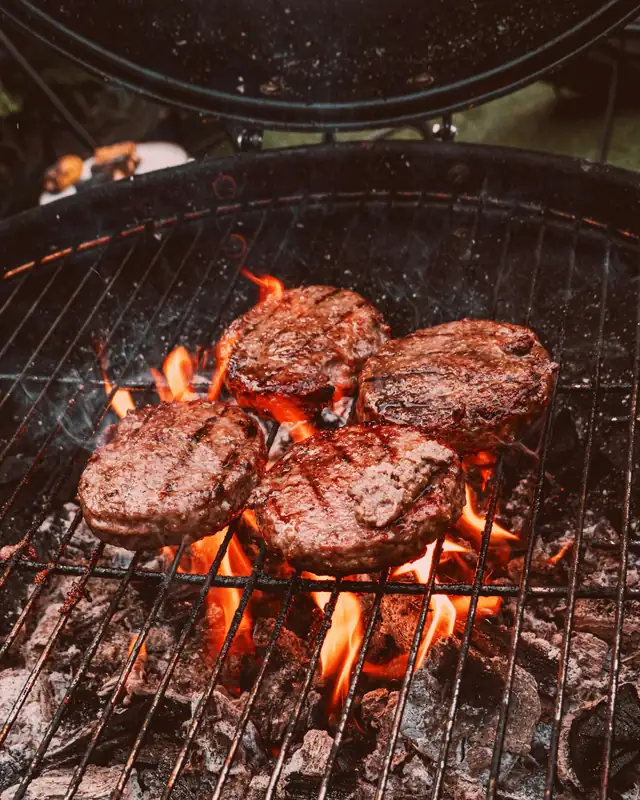
Best Charcoal Grills (Kettles and Kamados)
Kettles and kamados compared on airflow, ash handling, size and weight.
-
Comparison
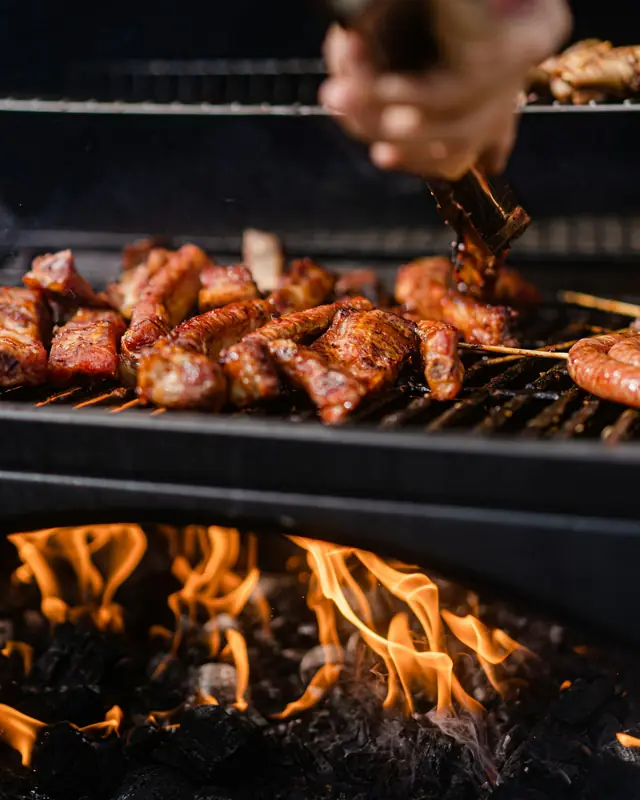
Charcoal vs Gas Grill: Flavor, Cost and Convenience
Live-fire flavor and high heat, or push-button convenience.
-
Comparison
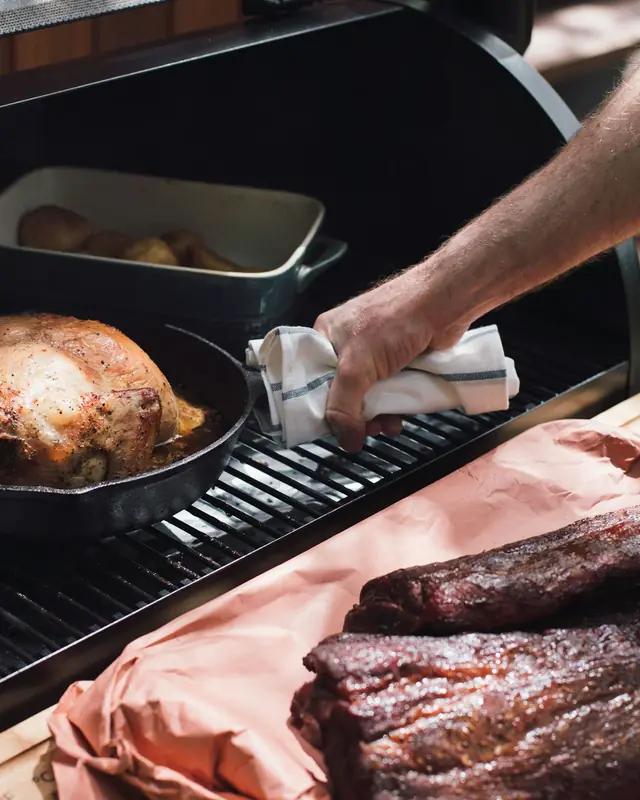
Pellet Grill vs Gas Grill: Which Should You Buy?
Smoke and set-and-forget control, or fast heat and easy searing.
-
Buying guide
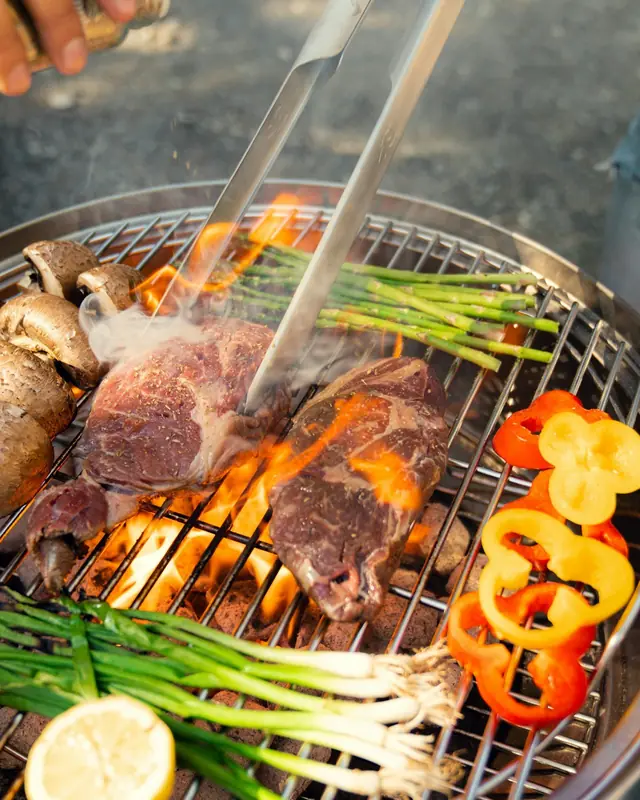
Best Portable Grills for Tailgating and Camping
Weight, fuel type, cooking area and setup for tailgate and camp grills.
-
Guide
Grill Safety: Placement, Propane Checks and Charcoal Rules
Placement, the propane leak test, charcoal rules and carbon monoxide.
-
Guide
Grilling Temperature Chart: Safe Internal Temperatures for Every Meat
The USDA numbers for every meat, poultry and seafood, with rest times.


Get the Grill-Side Card
A printable card with the USDA safe temperatures and an 8-point pre-cook safety check. It costs nothing and is sized to stick on the fridge.