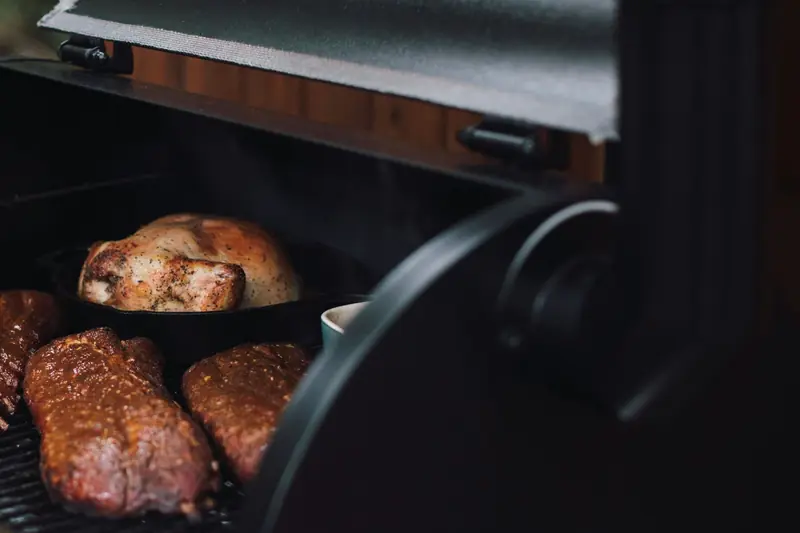
How Pellet Grills Work (and Who They're Right For)
The parts, the power requirement and who a pellet grill suits.
Quick answer
A pellet grill feeds wood pellets from a hopper to a fire pot with an auger, lights them with a hot rod and uses a fan to circulate heat and smoke, while a digital controller holds the temperature you set (Traeger). Because electricity runs the controller, ignition, auger and fan, it needs a power source. For low-and-slow cooking, keep the smoker's air temperature at 225 to 300°F (USDA FSIS).
Jump to section
The parts: hopper, auger, fire pot, hot rod, fan, controller
A pellet grill is a small machine that feeds itself. Traeger, a pellet grill maker, describes the main parts this way (Traeger):
| Part | What it does |
|---|---|
| Hopper | Holds the pellets |
| Auger | Carries pellets to the fire pot |
| Hot rod (igniter) | Lights the pellets |
| Fan | Circulates heat and smoke |
| Drip tray | Keeps flames off the food |
| Digital controller | Holds the set temperature |
Read the table as a chain of jobs. The hopper stores, the auger delivers, the hot rod lights, the fan moves air and the controller keeps score. If one link fails, the grill stops cooking the way you set it, which is why the manual's troubleshooting and cleaning pages matter.
Together they work like a loop. You set a temperature on the controller. The auger moves pellets from the hopper to the fire pot, the hot rod lights them, and the fan moves heat and smoke through the cooking chamber. When the grill needs more or less heat, the controller adjusts to hold your setting.
Those are the maker's descriptions of its own design, and other brands may arrange parts differently. A bigger hopper means fewer refills on a long cook, which is one reason hopper size appears in the spec table of our guide to the best pellet grills.
Why a pellet grill needs a power outlet
Electricity runs the controller, the ignition, the auger and the fan, so a pellet grill needs a power source (Traeger). That is the biggest practical difference from a gas or charcoal grill.
Think about it before you buy. Where will the grill stand? Is there an outdoor outlet within reach of the cord? Does a long outdoor extension cord make sense for your patio, or is another location better? Your manual will say what the maker requires for the power connection. If you are unsure about an outdoor outlet or cord, follow the manual and ask a qualified electrician.
The plus side of the power requirement is that the controller can do work for you. It keeps the feed and the fan working together while you do something else. The cost is that the grill depends on power: if the power goes out mid-cook, so does the grill's ability to hold temperature, and you would need a plan for finishing the food on another cooker.
If you often cook where there is no outlet, such as a campsite or a park, a pellet grill may not fit the way you grill.
What pellets are
Pellets are the fuel. Traeger describes its pellets as "100% all-natural compressed hardwood pellets" (Traeger). That is the maker's claim, not an independent finding.
In plain terms, a pellet is hardwood pressed into a small, uniform piece, which is what the auger needs to move fuel steadily to the fire pot. The wood also gives the food its smoke flavor. For other fuels, USDA FSIS says hickory, apple or maple chips or flakes give the most satisfactory smoke flavor when you smoke on a charcoal grill (USDA FSIS).
How many pellets a grill burns each hour, and its maximum temperature, vary by model. Check those numbers in the specs for the model you are considering, not in a general guide.
Holding temperature for low-and-slow cooks
This is what a pellet grill is good at. The controller holds the temperature you set, which takes much of the tending out of a long cook (Traeger).
For smoking, the safety target is a smoker air temperature of 225 to 300°F, and you finish to safe internal temperatures with a food thermometer (USDA FSIS).
The controller reads the grill, not your food. That is why a separate probe in the meat matters. Read our guide on how to smoke meat for the steps and done temperatures, and see the best wireless meat thermometers for probes that report to a phone or display.
Pellet vs gas vs charcoal: who owns what
Gas is the most common grill type in the older HPBA survey. In that survey, conducted in 2017 and released in 2018, 64% of owners had a gas grill, 44% had charcoal and 9% had electric. Wood pellet grill ownership was 3%, but 11% of prospective buyers planned to buy one that year (HPBA).
That is older survey data, so treat it as a snapshot of how interest was moving then. A newer HPBA survey, from September 2021 and released in 2023, found 70% of US households own at least one grill or smoker, up from 64% in 2019, and 80% of homeowners do (HPBA).
Ownership numbers tell you what people have, not what is best, and the pellet figure in that survey was small. Use them as context, not as a reason to buy. Which fits you best comes down to how you cook:
- Pellet: you want to set a temperature and smoke for hours, and you have an outlet.
- Gas: you want fast, on-demand heat for weeknight cooks.
- Charcoal: you want to manage the fire yourself.
Our pellet grill vs gas grill comparison goes point by point.
Weather and outdoor placement
A pellet grill is an electrical appliance, so water and weather deserve thought. Traeger states its grill is protected from water spray "less than 60 degrees from vertical" (Traeger). Treat that as a maker's spec, not as proof the grill is weatherproof.
Rain, snow and wind can all affect any outdoor cooker, and electrical parts add a reason to be careful. In practice, that means you should read the manual's guidance on rain and storage and keep the controller and cord out of standing water. A cover and a sheltered spot are sensible. Placement rules from fire-safety groups still apply, including keeping the grill well away from your home, railings, eaves and overhanging branches (ANSI/NFPA). Our grill safety guide has the full list.
Is a pellet grill right for you?
Buying a grill is a decision about habits more than features. A pellet grill suits you if you like to set a temperature and walk away, you have a power outlet near the cooking spot and you want smoke flavor without managing a fire. It suits you less if you cook where there is no power, if you want the fastest searing heat, or if you prefer the hands-on feel of charcoal.
Before you buy, ask yourself:
- Is there an outlet where the grill will sit?
- How many people do you cook for, and how often do you cook long?
- Where will the grill live in bad weather?
- Do you also want a second grill for fast weeknight cooks?
Then use the spec table on our best pellet grills page to compare cooking area, hopper size and other listed specs, and see our best smokers page if you want to compare with other smoker types.
Gear that helps
-
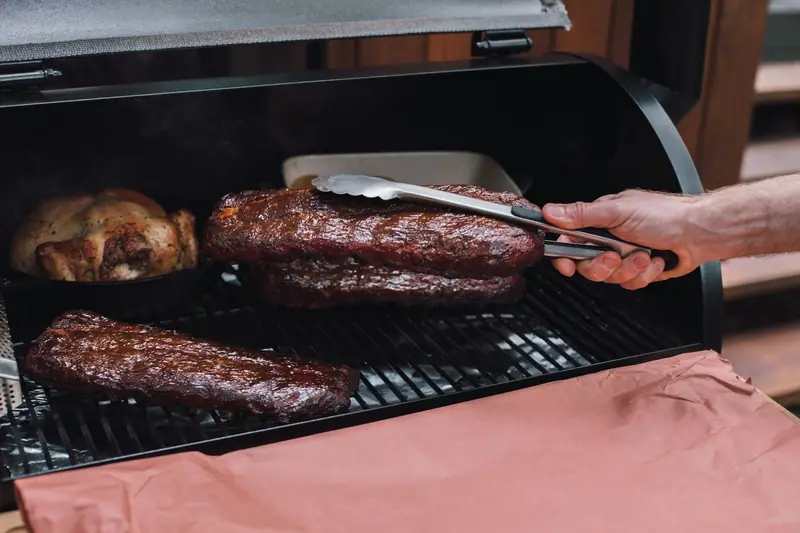
Best Pellet Grills
See hopper size, temperature range and cooking area side by side.
-
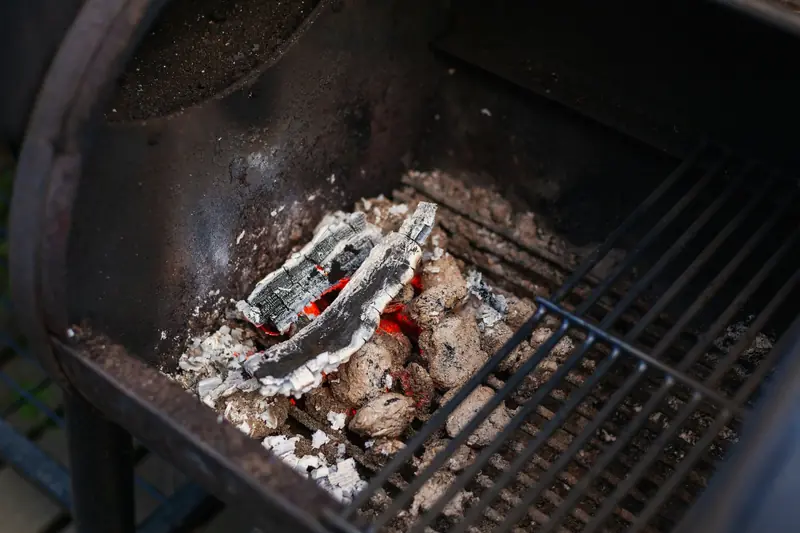
Best Smokers for Every Budget
Compare pellet models with offset, vertical and electric smokers.
-
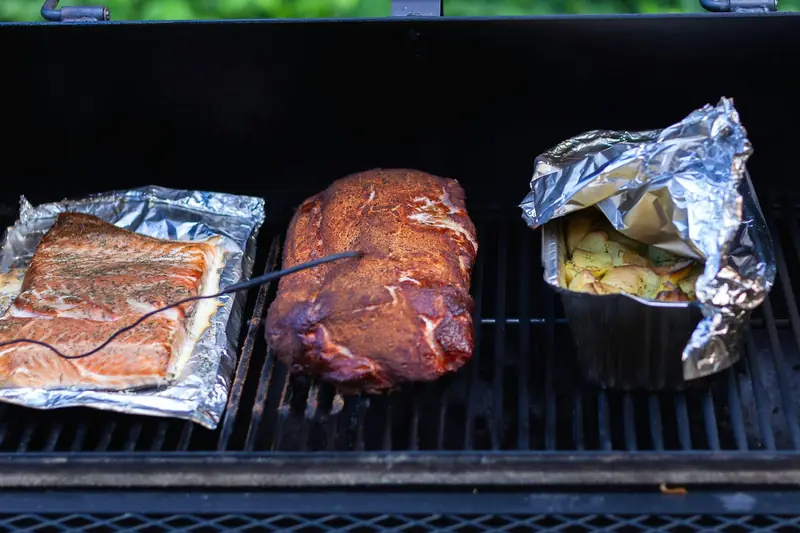
Best Wireless and Bluetooth Meat Thermometers
A leave-in probe checks the food while the controller handles the grill.
FAQ
Does a pellet grill need electricity?
It does. The controller, the ignition, the auger and the fan all draw electric power, so a pellet grill must sit near a power source (Traeger).
What are pellets made of?
Traeger's own wording is "100% all-natural compressed hardwood pellets", so read that as the maker's description (Traeger).
What smoker temperature should I aim for?
Hold the smoker's air at 225 to 300°F for low-and-slow cooking, per USDA FSIS, and confirm doneness with a food thermometer (USDA FSIS).
Related
-
Buying guide
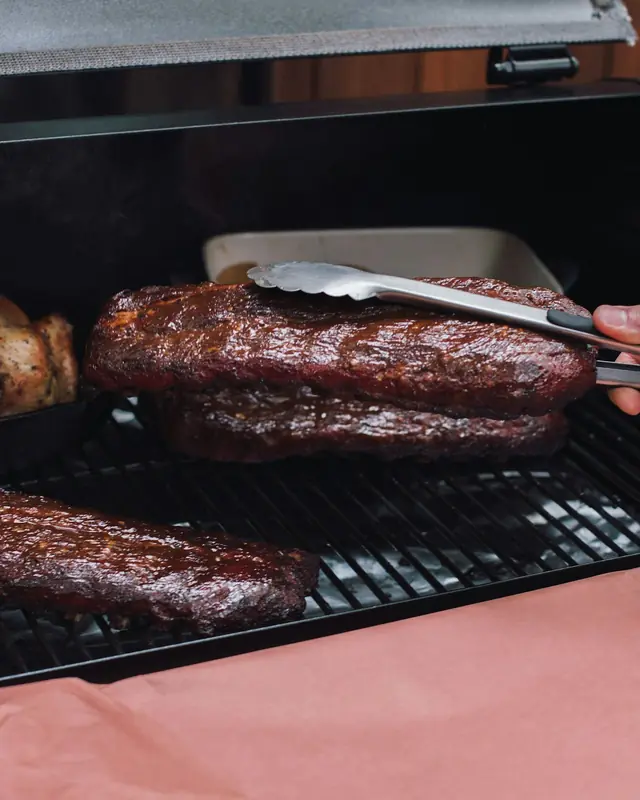
Best Pellet Grills
Controller type, cooking area, hopper size and searing heat, side by side.
-
Buying guide
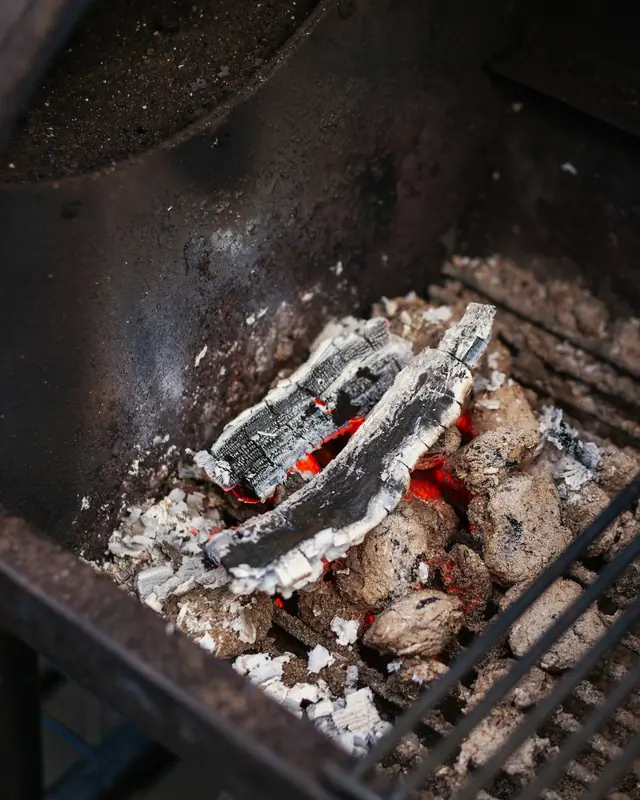
Best Smokers for Every Budget
Offset, vertical, electric and pellet smokers, matched to how much you want to tend the fire.
-
Comparison
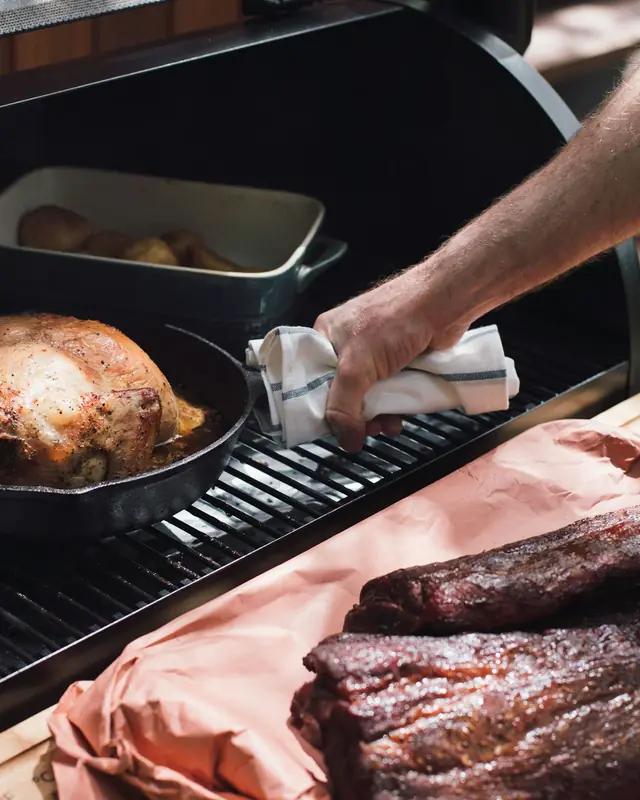
Pellet Grill vs Gas Grill: Which Should You Buy?
Smoke and set-and-forget control, or fast heat and easy searing.
-
Buying guide
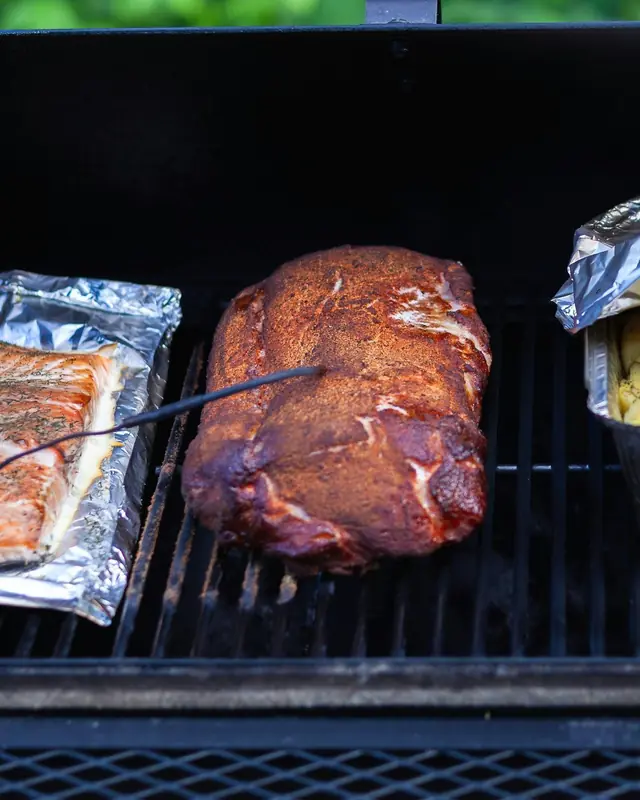
Best Wireless and Bluetooth Meat Thermometers
Leave-in probes compared on range, probe count, ambient sensors and battery.
-
Guide
How to Smoke Meat: A Beginner's Guide (USDA-Safe)
The USDA smoker window, done temperatures and the safe way to start.
-
Buying guide
Best Gas Grills
Burners, cooking area, grates and warranty for propane and natural gas grills.

Get the Grill-Side Card
A printable card with the USDA safe temperatures and an 8-point pre-cook safety check. It costs nothing and is sized to stick on the fridge.