Pellet Grill vs Gas Grill: Which Should You Buy?
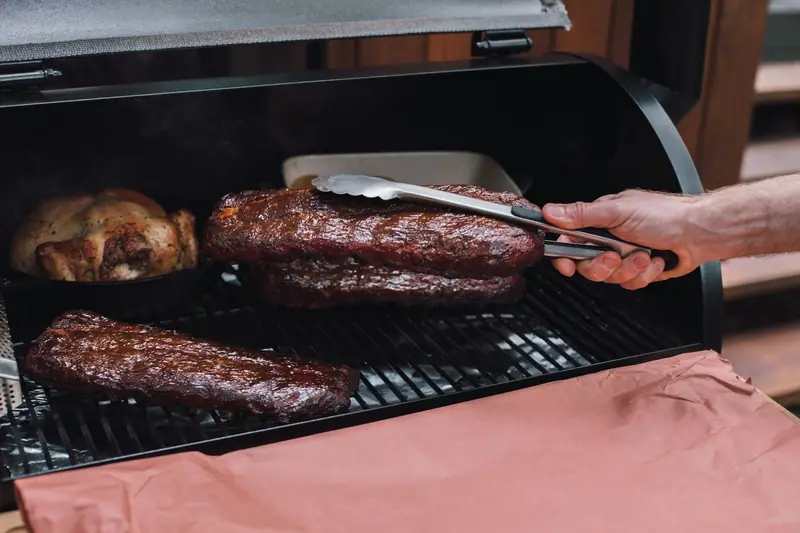
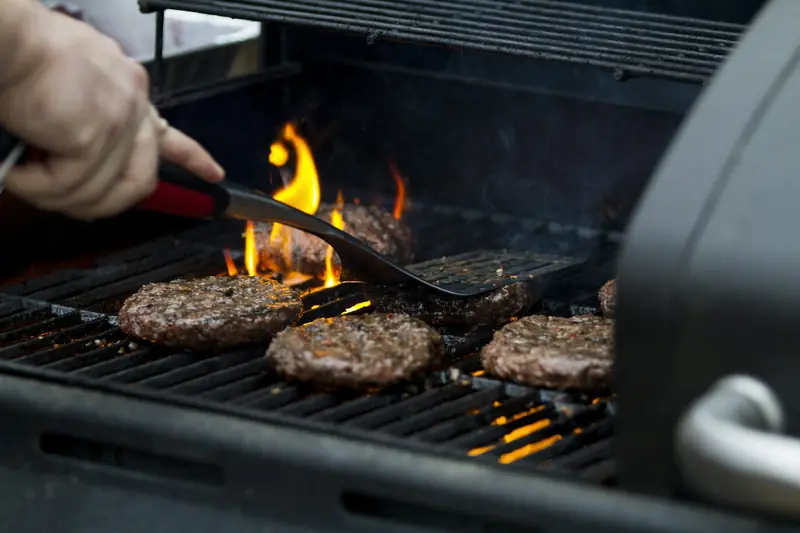
A gas grill is the fast, familiar choice: knobs, quick heat, good searing. A pellet grill trades some of that speed for wood smoke and a controller that holds a set temperature for hours. Which one fits depends on whether you cook more weeknight burgers or weekend briskets.
Pellet grill: the better choice if…
- You want real wood-smoke flavor without tending a fire.
- You cook low and slow often: ribs, brisket, pork shoulder.
- You like setting a temperature and checking from your phone.
Gas grill: the better choice if…
- You grill on weeknights and want heat in minutes.
- Searing steaks and burgers matters more than smoke.
- There is no outdoor power outlet where the grill will stand.
Jump to section
At a glance
| Point | Pellet grill | Gas grill |
|---|---|---|
| Fuel | Compressed hardwood pellets | Propane or natural gas |
| Smoke flavor | Wood smoke from the pellets | Little smoke unless you add a smoker box |
| Temperature control | Digital controller holds a set temperature | Knobs; you adjust by hand |
| Searing | Varies; check max temperature or a sear zone | Strong direct heat on most models |
| Power needed | Yes: controller, igniter, auger and fan | Only for some igniters and lights |
| Cleanup | Ash in the fire pot, grease tray | Grease tray and grates |
| Ownership (HPBA 2017 survey) | 3% of grill owners | 64% of grill owners |
Fuel and smoke flavor
A pellet grill burns compressed hardwood pellets, so the smoke flavor comes with the fuel. Traeger describes its fuel as compressed hardwood pellets and the grill's fan as circulating both heat and smoke (Traeger). A gas grill burns propane or natural gas, which adds heat but little flavor of its own; any smoke comes from drippings or a smoker box with wood chips.
Temperature control
On a pellet grill you set a temperature and a digital controller feeds pellets to hold it (Traeger). On a gas grill you turn knobs and watch the lid thermometer. For long, low cooks, USDA advises keeping the smoker's air temperature between 225 and 300°F the whole time (USDA FSIS), which is the kind of job a pellet controller is built for.
Searing ability
Gas grills put a flame right under the grate, which is why they sear well. Pellet grills heat with circulating air, and searing performance varies a lot by model. If you sear often, compare the listed maximum temperature and look for a sear zone in our pellet grill guide.
Power and placement
A pellet grill needs electricity for the controller, igniter, auger and fan (Traeger). That means an outdoor outlet or a power source near where it stands. A gas grill needs only its fuel supply. Either way, NFPA advises placing the grill well away from the house, deck railings, eaves and overhanging branches (NFPA via ANSI).
Preheat and weeknight speed
Gas grills reach cooking heat quickly; Weber's routine is to preheat on high for 10 to 15 minutes, which also burns off old residue (Weber). Pellet grills run an ignition cycle before they settle at the set temperature; check the start-up steps in the manual of any model you are considering.
Maintenance
Pellet grills leave ash in the fire pot that needs clearing, plus a grease tray, and pellets must stay dry. Gas grills need grease tray emptying, grate cleaning and an annual leak test on the hose. NFPA lists grease and fat buildup as a fire risk for both (NFPA via ANSI).
How many people own each
In an HPBA survey from 2017 (released in 2018), 64% of grill owners owned a gas grill and 3% a wood pellet grill, while 11% of people planning to buy a grill had a pellet grill in mind (HPBA). The survey is old, so treat it as a sign of direction rather than today's numbers.
Which should you buy?
If you cook fast meals most nights and sear often, buy a gas grill. If weekends are for ribs and brisket and you want smoke without babysitting a fire, buy a pellet grill. If you want both and have the space, many cooks keep a gas grill for weeknights and add a pellet grill or smoker later.
Alternatives
Want smoke and searing from one fire? A charcoal grill does both, at the cost of more hands-on cooking. Read charcoal vs gas grill for that comparison.
FAQ
Can a pellet grill replace a gas grill?
For many cooks, yes, especially if a model has a sear zone or a high maximum temperature. If you value instant heat and strong searing most, a gas grill still does that job more simply.
Do pellet grills need electricity?
Yes. The controller, the igniter, the auger and the fan all run on electricity, so you need a power source near the grill (Traeger).
Which is safer?
Both are fine outdoors, set well back from the house, railings, eaves and branches. Gas adds one extra step, a soapy-water leak check on the hose (NFPA via CT.gov), and both need grease cleaned out regularly.
Related
-
Buying guide
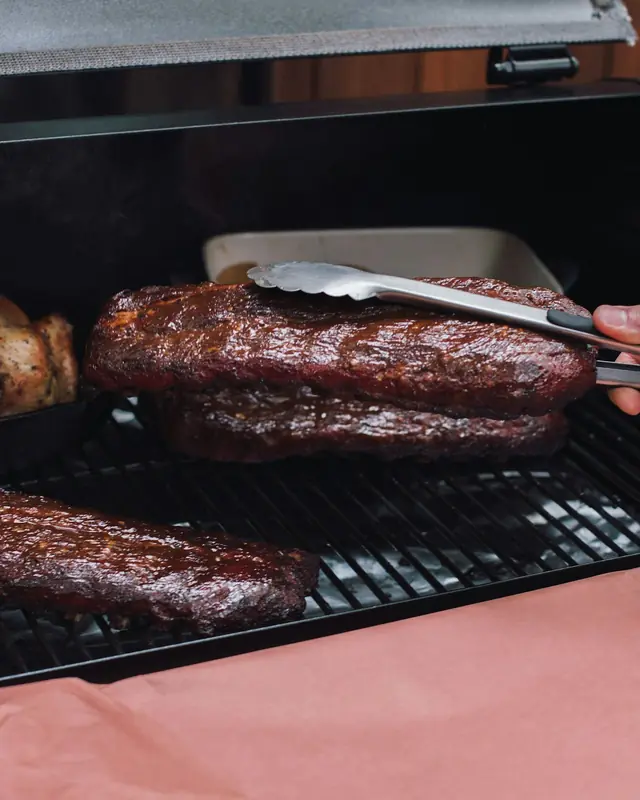
Best Pellet Grills
Controller type, cooking area, hopper size and searing heat, side by side.
-
Buying guide
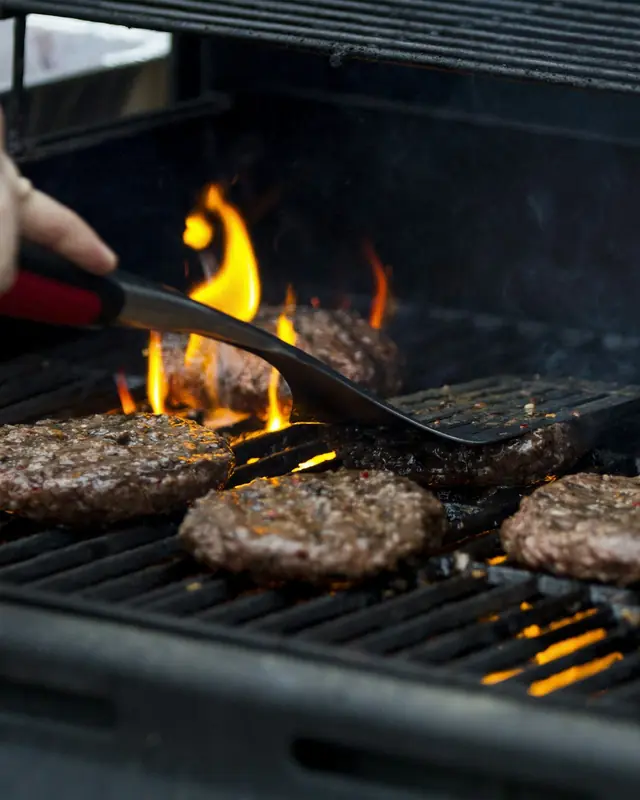
Best Gas Grills
Burners, cooking area, grates and warranty for propane and natural gas grills.
-
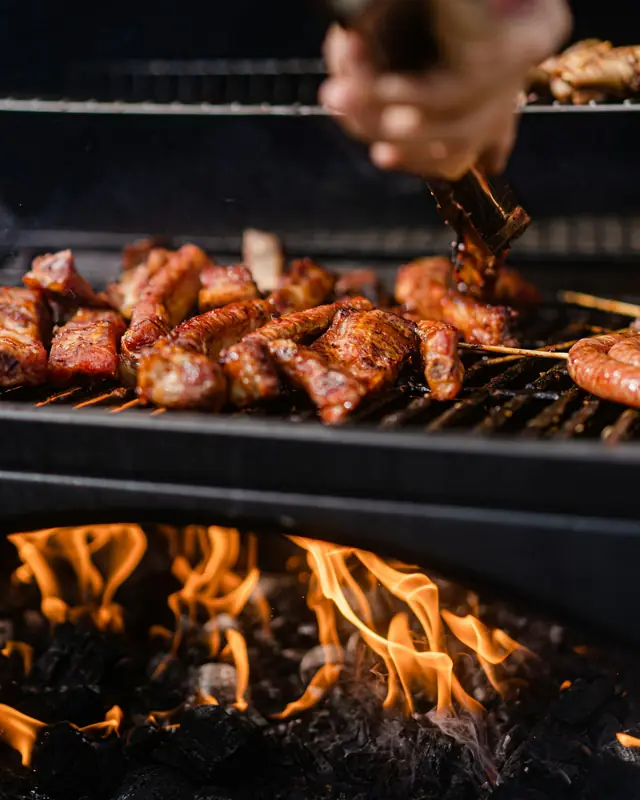
Comparison
Charcoal vs Gas Grill: Flavor, Cost and Convenience
Live-fire flavor and high heat, or push-button convenience.
-
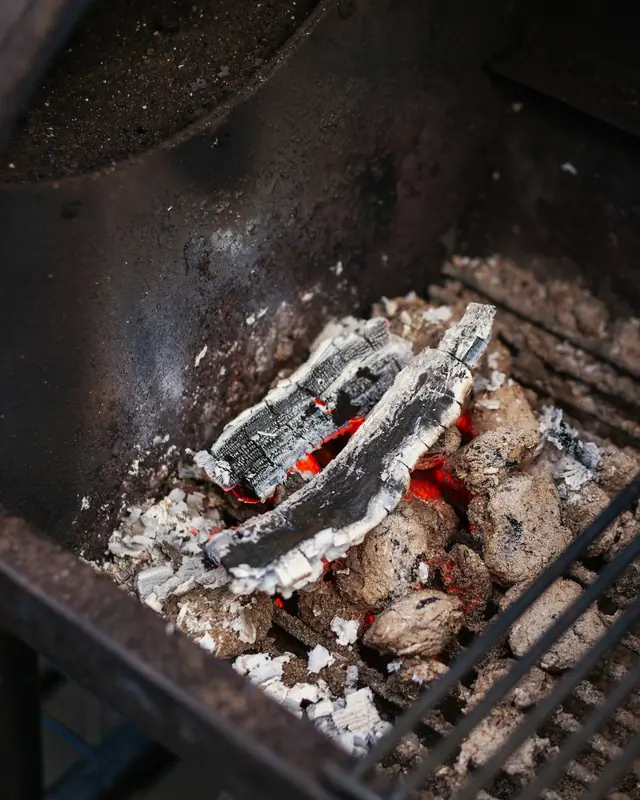
Buying guide
Best Smokers for Every Budget
Offset, vertical, electric and pellet smokers, matched to how much you want to tend the fire.
-
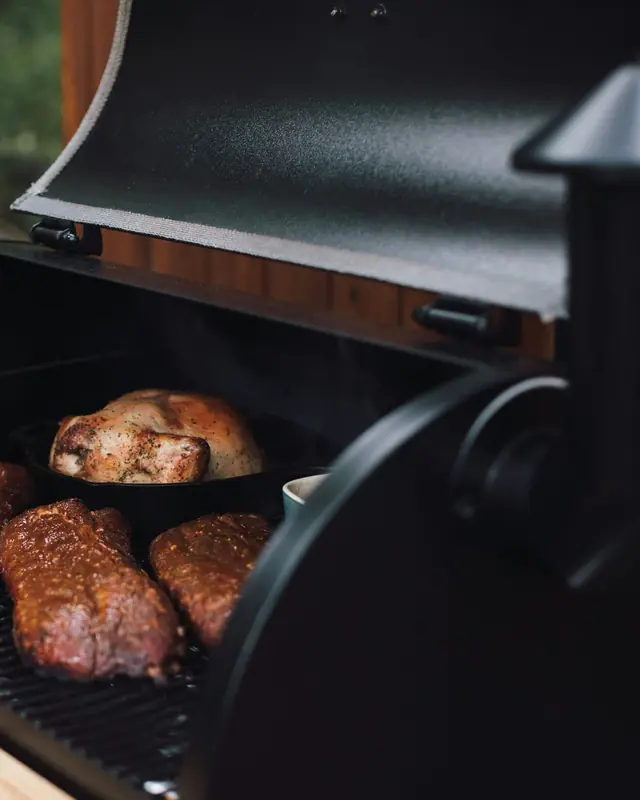
Guide
How Pellet Grills Work (and Who They're Right For)
The parts, the power requirement and who a pellet grill suits.

Get the Grill-Side Card
A printable card with the USDA safe temperatures and an 8-point pre-cook safety check. It costs nothing and is sized to stick on the fridge.